Clinical Case 7 · Decision-making and scientific gap
Implant Rehabilitation While Preserving a Natural Tooth: When One Remaining Tooth Plays a Key Role
Preserving tooth 47 to retain part of the natural sensory feedback in an extensive implant reconstruction
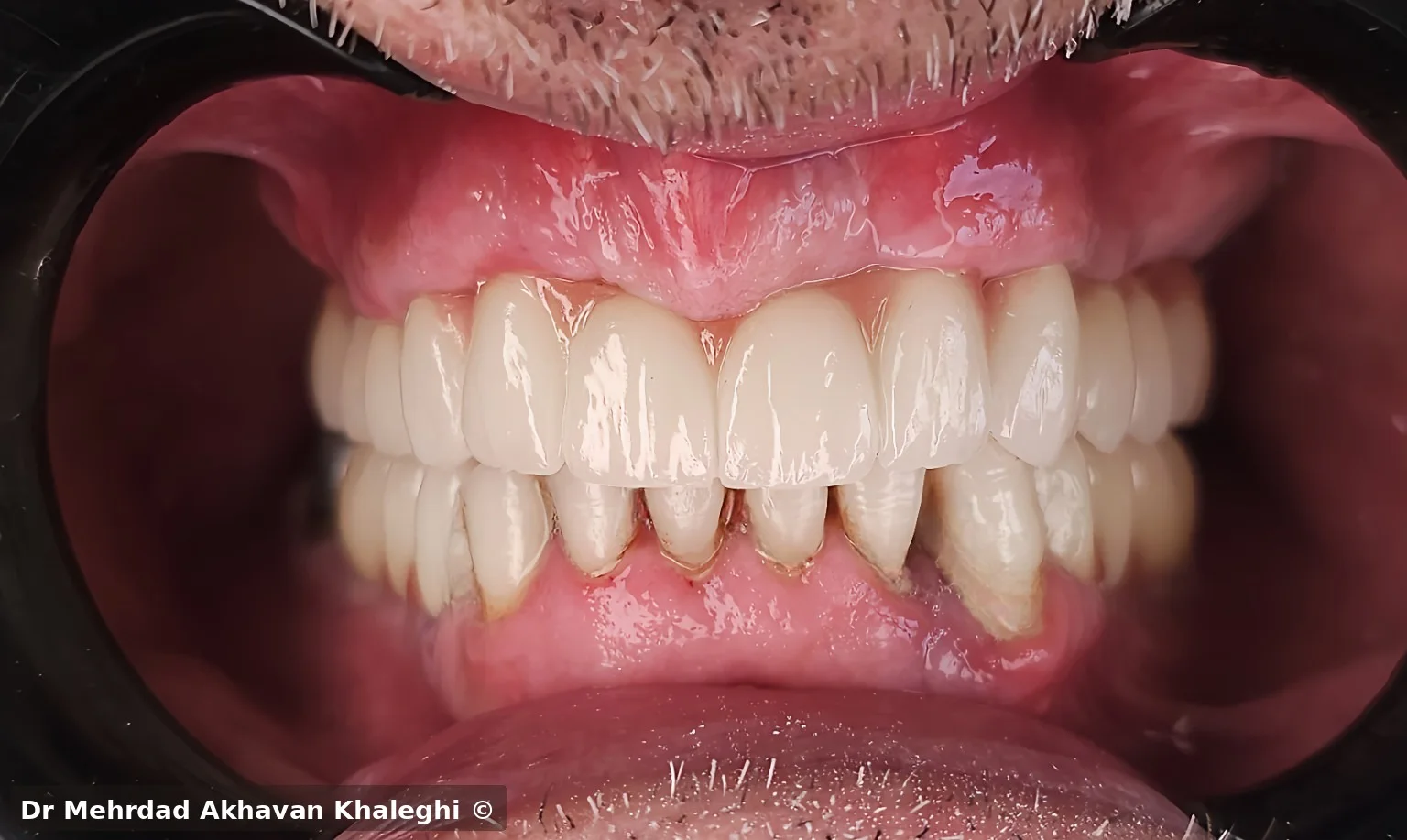
In this case, the patient was a 57-year-old man with several severely compromised or missing teeth in the maxilla and bilateral posterior edentulous areas in the mandible. Esthetics mattered to him, but his main complaint was function and the ability to chew. The treatment plan ultimately required extensive implant reconstruction. One of the most important decisions in this case, however, was not about the implants; it was about a tooth that could still be preserved: tooth 47.
The question behind preserving tooth 47
One remaining tooth; one sensory question
In a reconstruction of this scale, removing a remaining natural tooth and replacing it with an implant can be tempting in the name of design uniformity or even conceptual simplicity. Tooth 47 was not treated as merely another chewing unit. As long as it remained biologically and prosthetically maintainable, the clinical question was whether this single posterior natural tooth could preserve something within the masticatory system that implants do not reproduce in quite the same way: periodontal-ligament sensory feedback.
The purpose of preserving 47 was to retain part of the natural proprioceptive and mechanosensory feedback. Periodontal mechanoreceptors transmit information about the magnitude, direction, and timing of loading to the nervous system and contribute to regulation of masticatory muscle activity. Implants are not entirely devoid of sensory feedback, because osseoperception exists, but studies indicate that tactile sensibility and force-detection thresholds are not equivalent to those of natural teeth and are generally less sensitive.
The scientific gap: from physiology to a clinical hypothesis
Separating evidence, hypothesis, and observation
The boundary between established science and a clinical hypothesis is important here. Current evidence indicates that natural teeth provide more precise sensory feedback through periodontal mechanoreceptors, while implants only partially reproduce sensory function through osseoperception. Occlusal forces and overload are also relevant to mechanical complications of implant prostheses, including ceramic chipping and other prosthetic-component problems.
Those findings do not directly demonstrate that preserving a single natural molar will necessarily increase implant longevity or reduce chipping. Direct outcome-based evidence for that specific relationship is insufficient. The working hypothesis was that retaining a more natural source of load perception might help the patient regulate the intensity and quality of chewing forces more effectively and, in turn, expose the implant reconstruction to fewer severe or poorly perceived loads. The hypothesis is physiologically defensible, but at this stage it should remain a hypothesis rather than be presented as established fact.
What the evidence supports
Natural teeth provide more precise periodontal-ligament mechanosensory feedback. Implants recover part of sensory function through osseoperception, but tactile sensibility is not equivalent to that of natural teeth.
The clinical hypothesis
Preserving 47 might help regulate chewing-force intensity and reduce exposure of the implant reconstruction to severe, poorly perceived loads; this specific outcome relationship has not been established.
What this patient showed
The patient reported better food sensing and control on the side with the natural tooth, and no clinically relevant complication was reported over five years. This is consistent with the hypothesis, not proof of it.
Treatment design
Extensive reconstruction without automatic replacement of natural structure
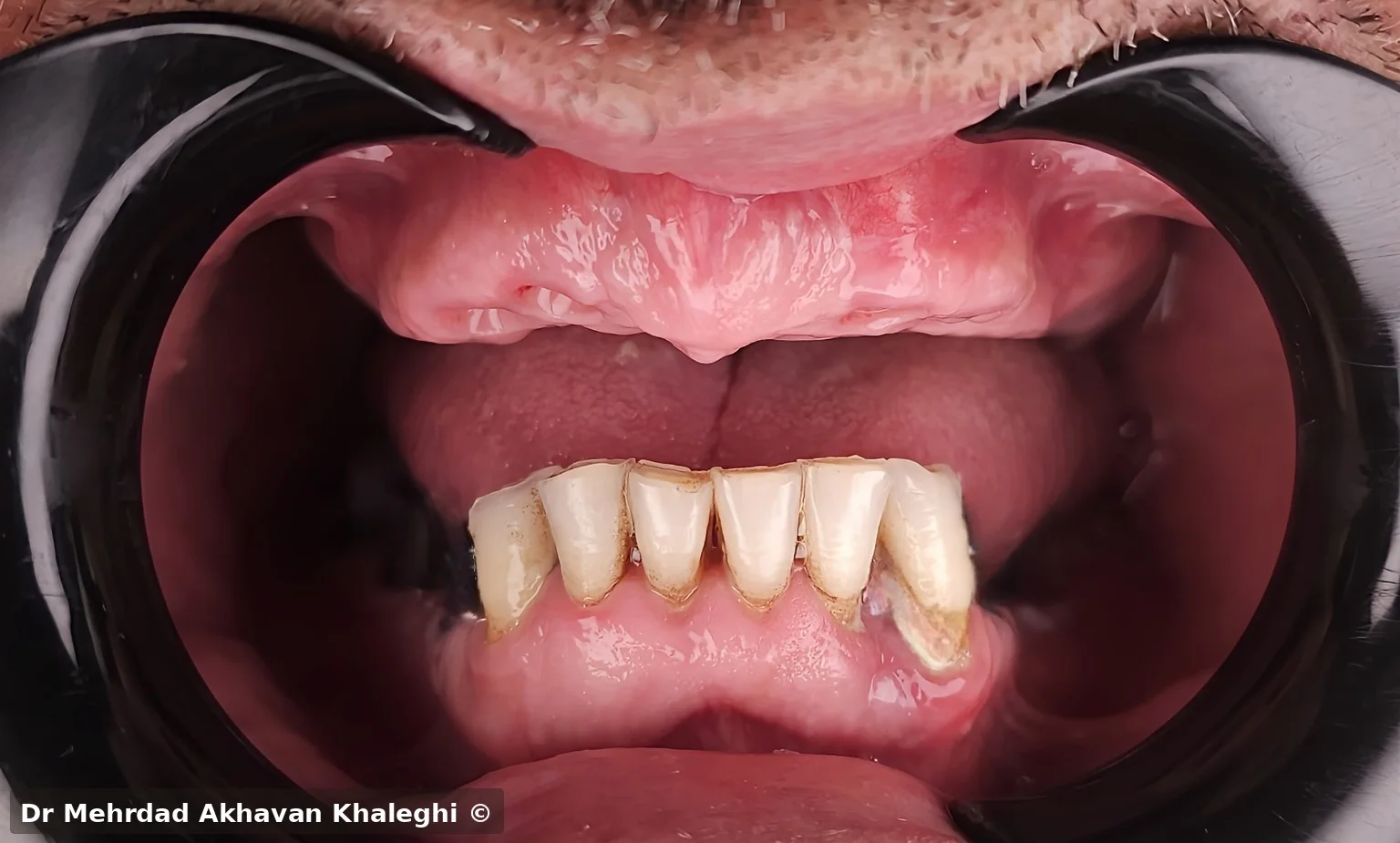
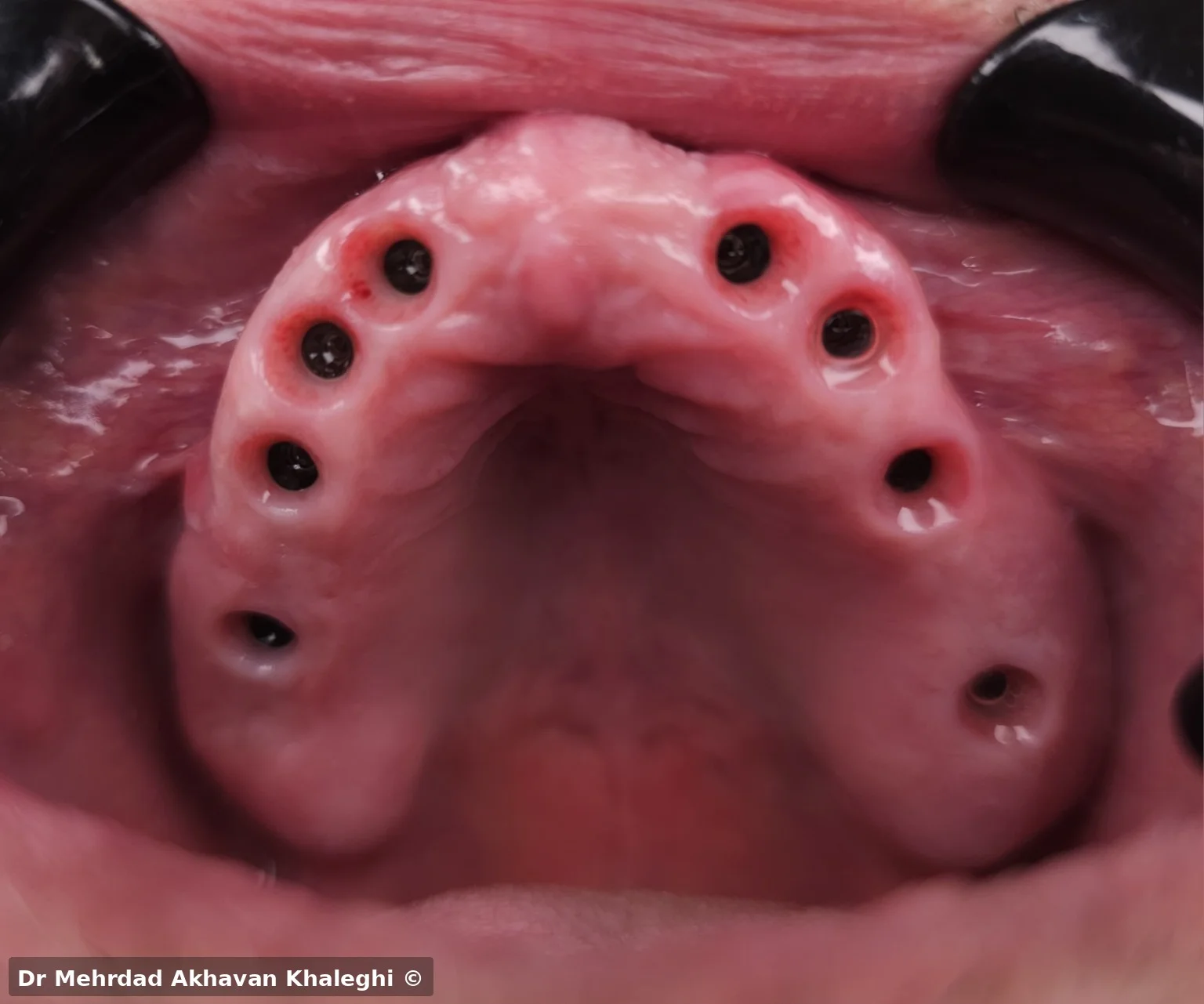
Eight implants were placed in the maxilla, and the definitive reconstruction was designed as three independent prosthetic segments. In the mandible, the natural teeth from canine to canine were preserved, with two posterior implants placed on each side. Tooth 47 was deliberately retained. It already had an amalgam restoration at baseline, but it was clinically stable and no intervention was performed on it. The implant restorations were cement-retained and fabricated in layered zirconia.
Segmentation was not simply a technical decision; it preserved serviceability and better control over each part of the reconstruction. At the same time, retaining useful natural structures followed the same broader logic: an extensive reconstruction did not mean that everything natural that remained had to be replaced.
Maxilla
8 implants / 3 independent segments
Mandible
2 posterior implants per side
Tooth 47
Deliberately preserved; existing amalgam left untouched
Restoration
cement-retained layered zirconia
Occlusion: preserving sensation without turning 47 into a loading target
Preserving feedback with a controlled occlusal role
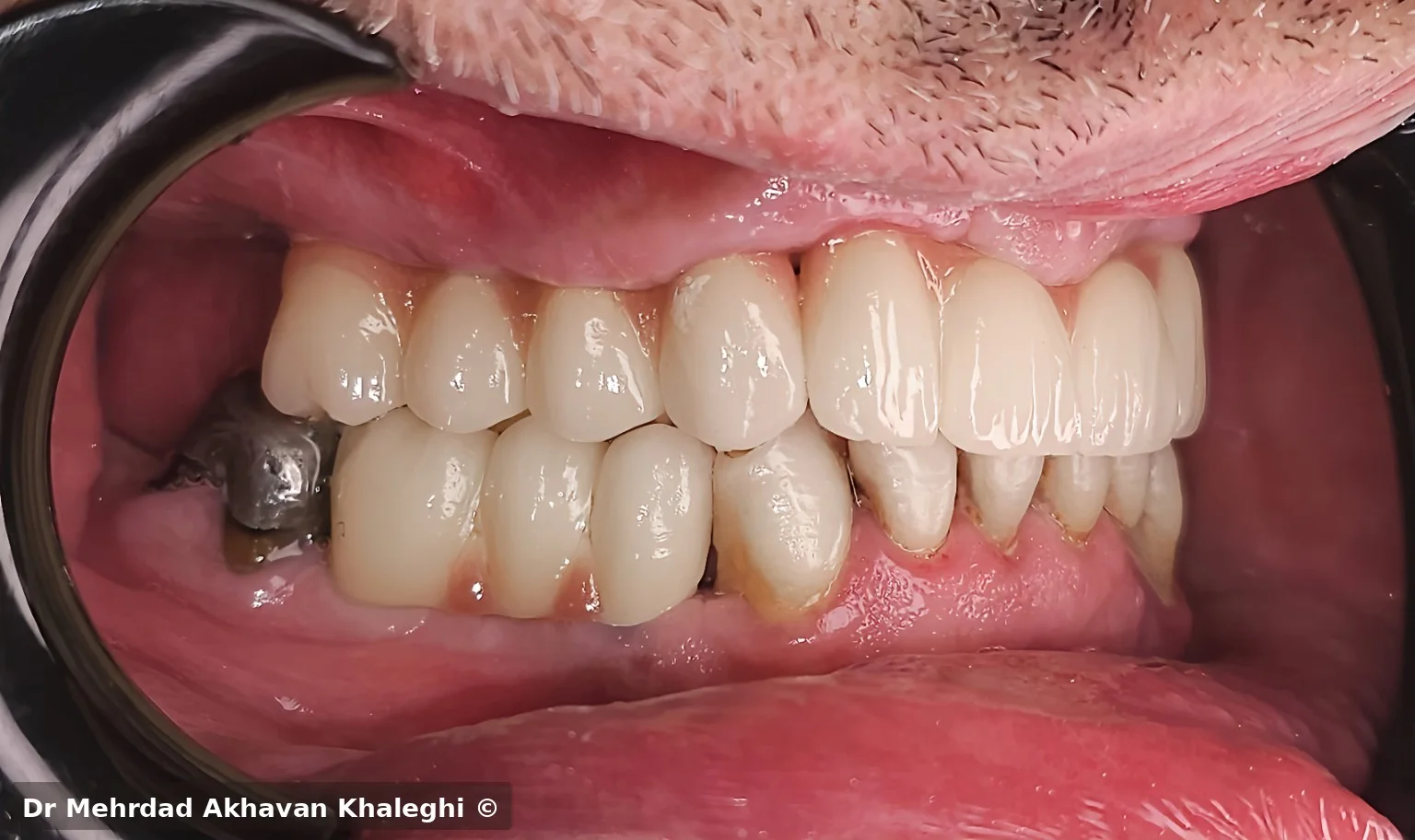
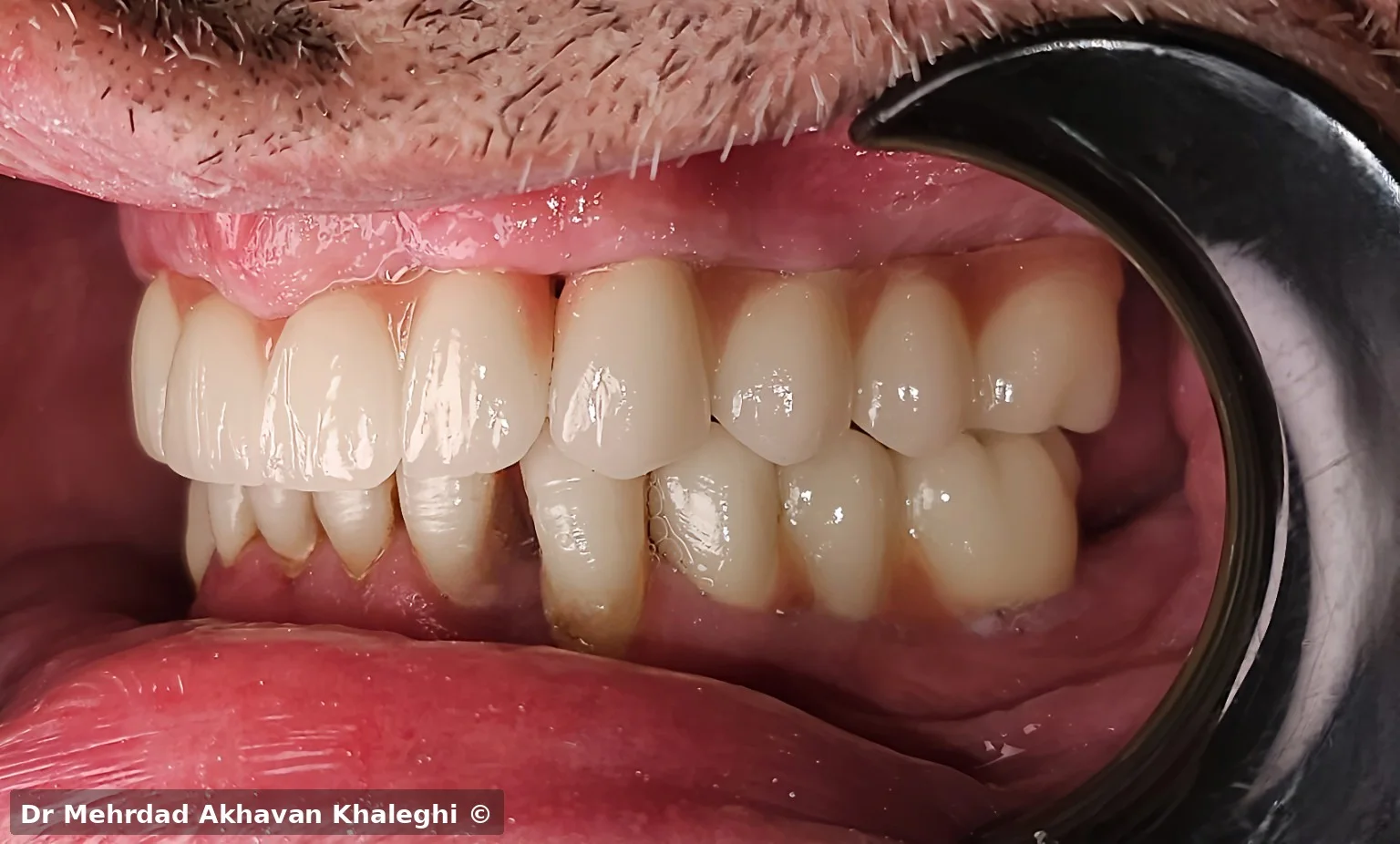
Preserving tooth 47 did not mean using it as a guiding tooth or as a primary loading point. It maintained full contact in MIP but was excluded from lateral and protrusive excursions. Lateral movements were managed with a limited group-function scheme on the canine and first premolar.
That distinction mattered. If one reason for preserving 47 was to benefit from its sensory feedback, it would have been contradictory to expose that same tooth to unnecessary eccentric loading. Its role was therefore intentionally limited and controlled.
MIP
47 in full contact
Lateral
47 out of contact
Protrusive
47 out of contact
Guidance
limited group function · canine + first premolar
What the patient experienced
When the patient's experience aligned with the hypothesis
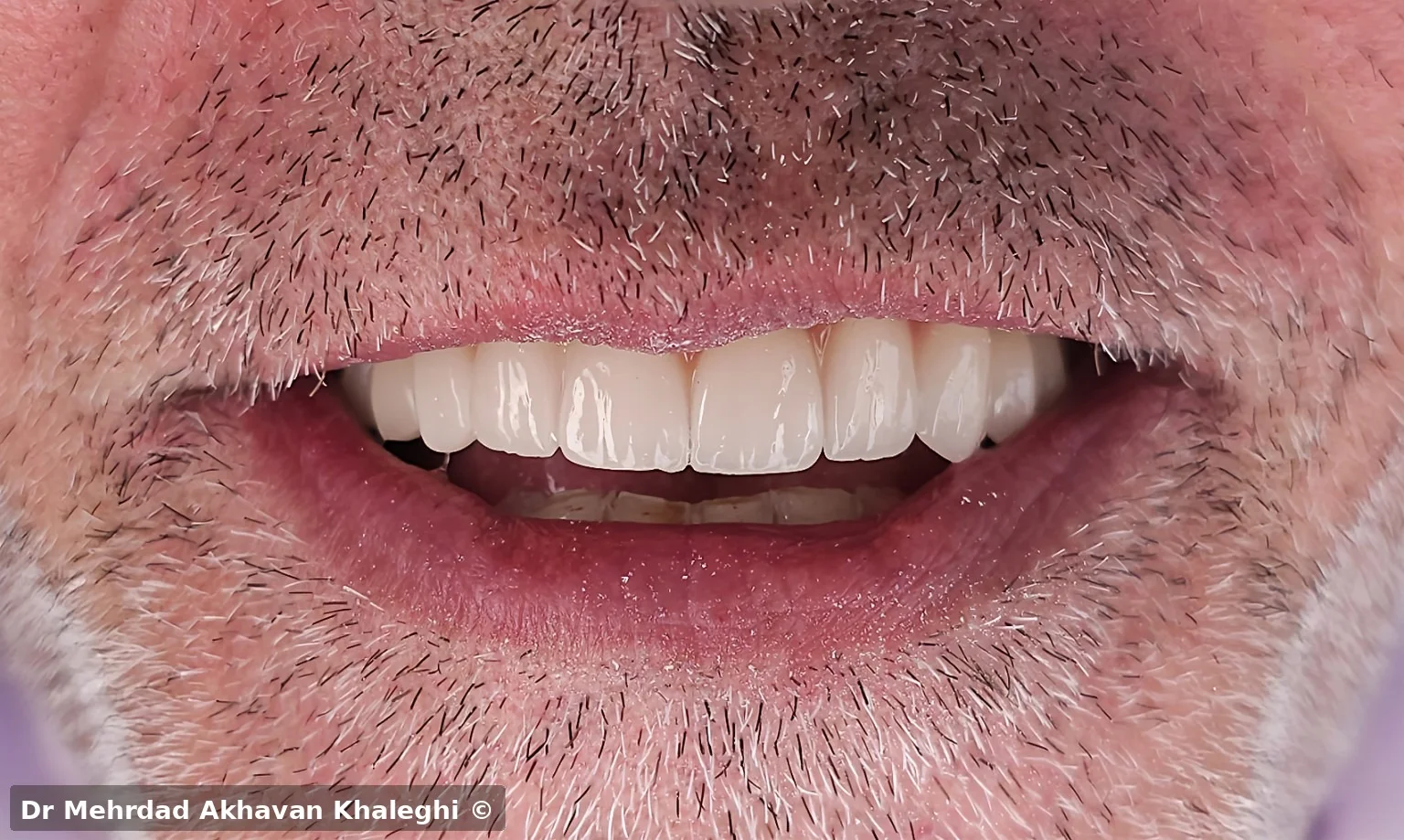
After treatment, the patient specifically reported that he could sense and control food better on the side where the natural tooth remained and that chewing on that side felt more natural. This observation was particularly interesting because it was consistent with the hypothesis that had guided the decision to preserve 47 before treatment.
A single patient's experience cannot establish a general hypothesis. This report should be treated as a clinical observation: it is consistent with the hypothesis and makes the question worth investigating further, but it does not establish causation.
Five-year follow-up
Five years without a clinically relevant complication
Over five years of follow-up, no clinically relevant complication was reported, including porcelain chipping, debonding, screw loosening, a prosthetic problem requiring repair, or an implant complication requiring intervention. The clinical course was favorable, but the absence of complications should not be attributed to preservation of tooth 47 alone. Many variables influence the outcome of an extensive implant reconstruction.
Conclusion
Conclusion
The value of this case was not the number of implants or the extent of the reconstruction. The important point was that within a large rehabilitation, one natural tooth could still have a role beyond functioning as a chewing unit.
Preserving tooth 47 was an attempt to retain part of the natural sensory feedback of the masticatory system—a decision grounded in established periodontal physiology while also acknowledging the limits of the evidence. The patient's experience and five years of complication-free function were consistent with the hypothesis, but they do not prove it.
Sometimes a worthwhile scientific question begins exactly there: the available evidence is strong enough to justify the question, but not yet strong enough to give us a definitive answer.
Selected scientific references
Selected scientific references
- Piancino MG, Isola G, Cannavale R, et al. From periodontal mechanoreceptors to chewing motor control: A systematic review. Arch Oral Biol. 2017;78:109–121. doi:10.1016/j.archoralbio.2017.02.010.
- Song D, Shujaat S, Politis C, Orhan K, Jacobs R. Osseoperception following dental implant treatment: A systematic review. J Oral Rehabil. 2022;49(5):573–585. doi:10.1111/joor.13296.
- Singh A, Pokarram SS, Podder S. Comparative analysis of active tactile sensibility in single dental implant and natural teeth: A systematic review of clinical studies. J Prosthet Dent. 2026;135(6):e34–e43. doi:10.1016/j.prosdent.2025.12.019.
- Stilwell C. Occlusal considerations in maintaining health of implants and their restorations. Br Dent J. 2024;236:773–779. doi:10.1038/s41415-024-7407-7.
Clinical case and photography © Dr Mehrdad Akhavan Khaleghi. Unauthorized use or reproduction prohibited.