Clinical Case 1
Full-Mouth Rehabilitation: Evaluating the Definitive Plan First Through Provisional Rehabilitation
The patient presented with difficulty chewing and dissatisfaction with the appearance of the teeth. Several teeth were missing, the remaining dentition showed substantial wear, and there was very little restorative space available for rebuilding the occlusion. A pronounced Class II jaw relationship added another layer of complexity.
This was not simply a matter of replacing missing teeth or covering worn teeth with restorations. The treatment would change the occlusal relationships, vertical dimension, and position of multiple teeth. The plan was therefore not to commit those changes directly to definitive restorations before first seeing how they behaved in the patient’s mouth.
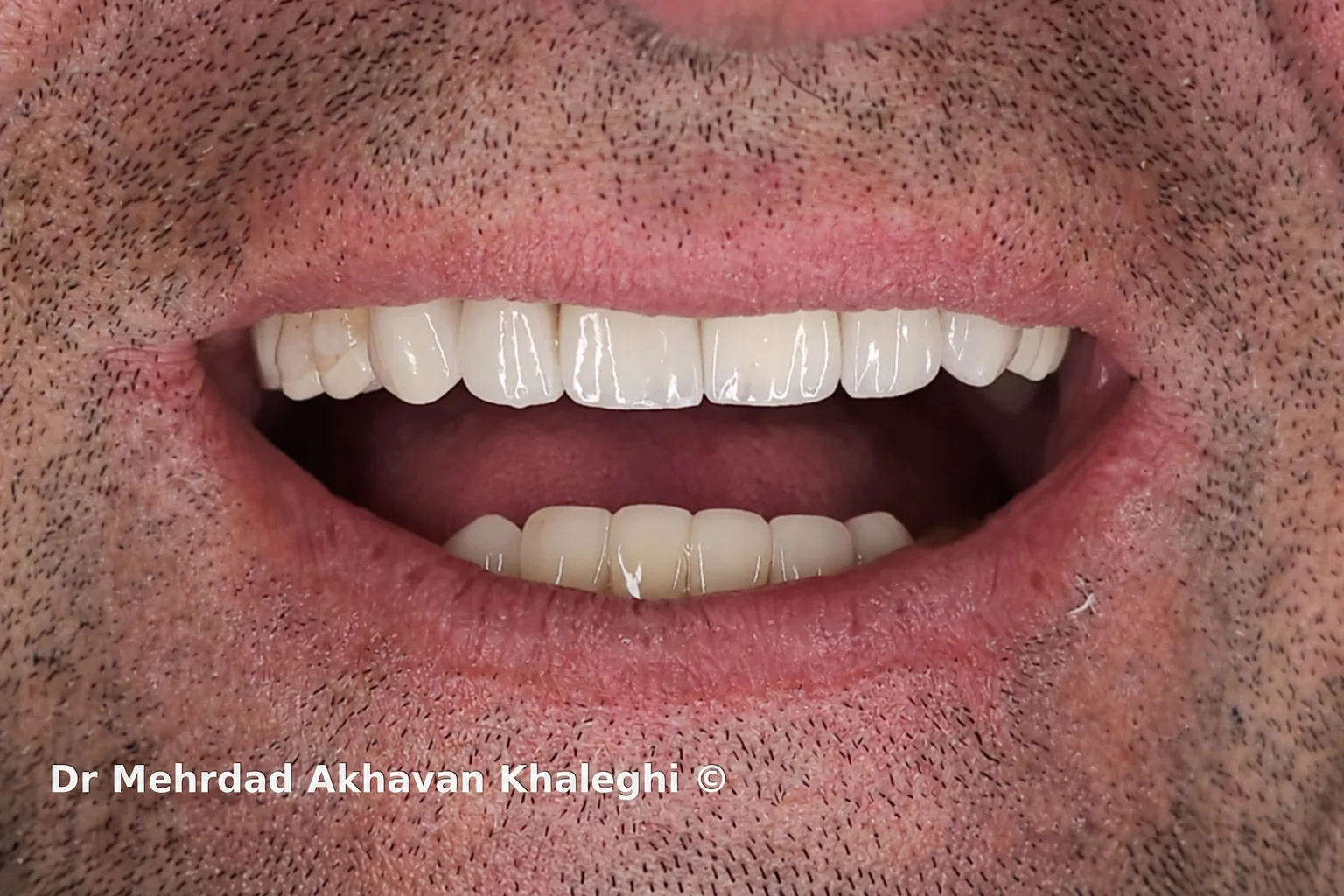
Initial condition
A tooth cannot always be understood in isolation
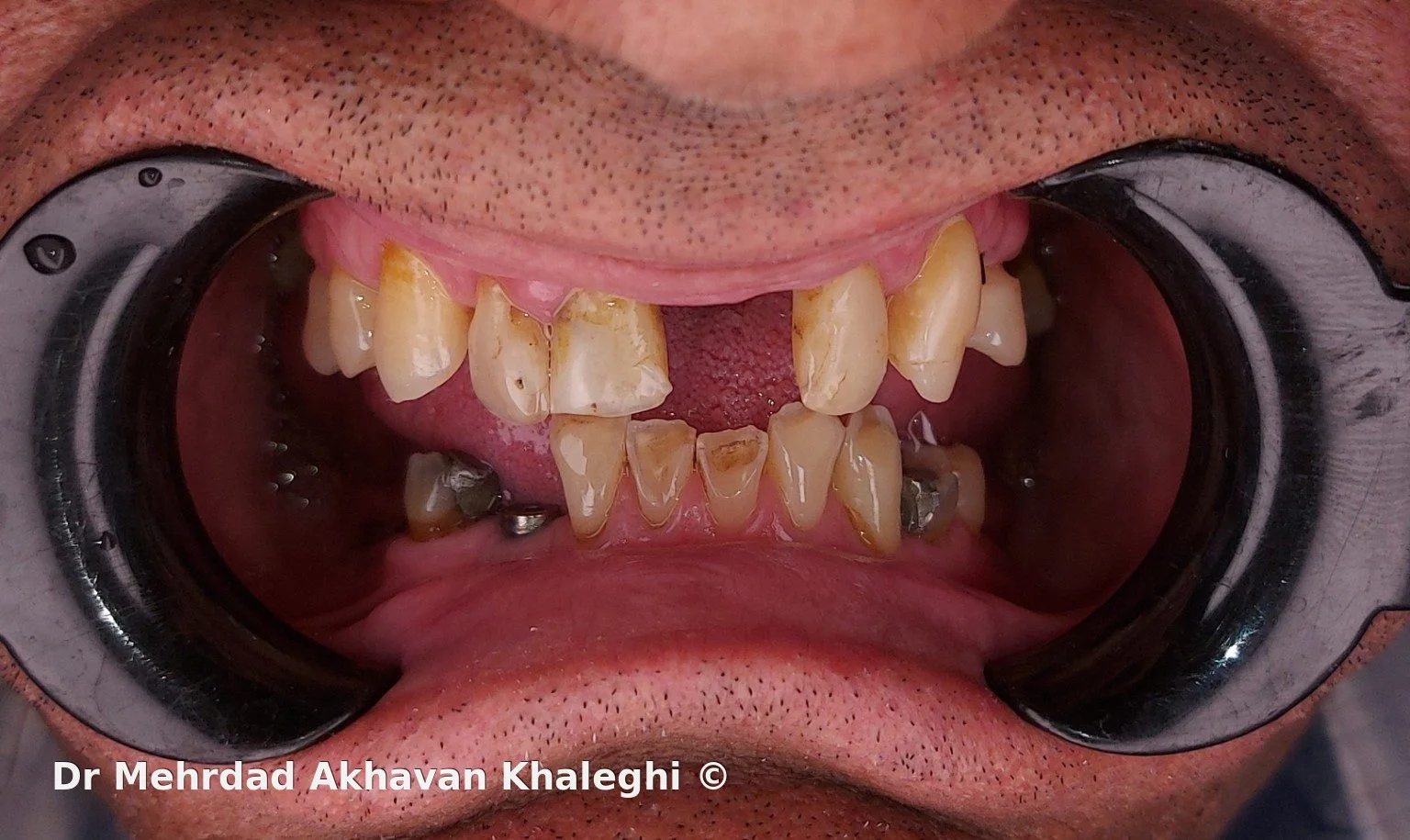
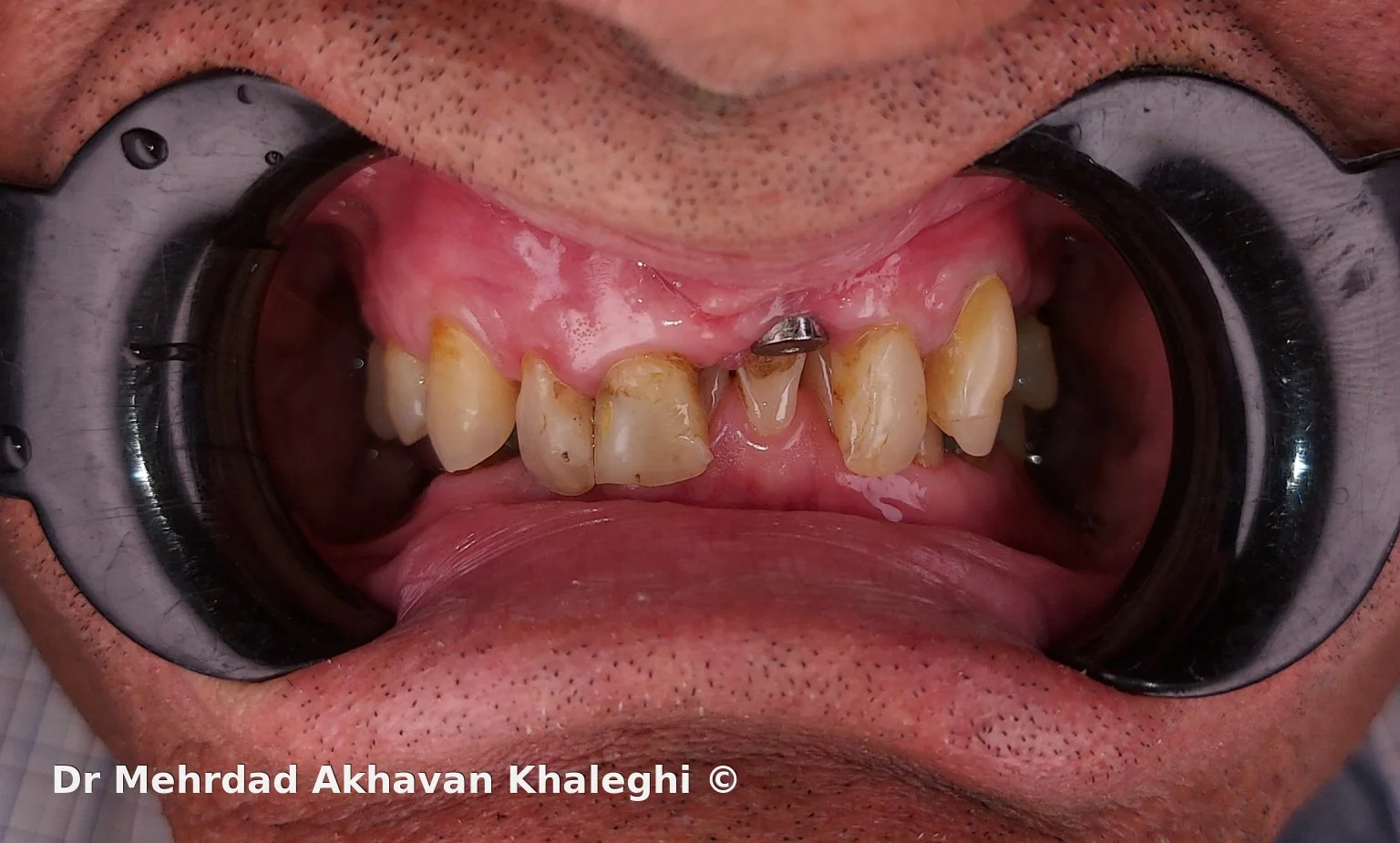
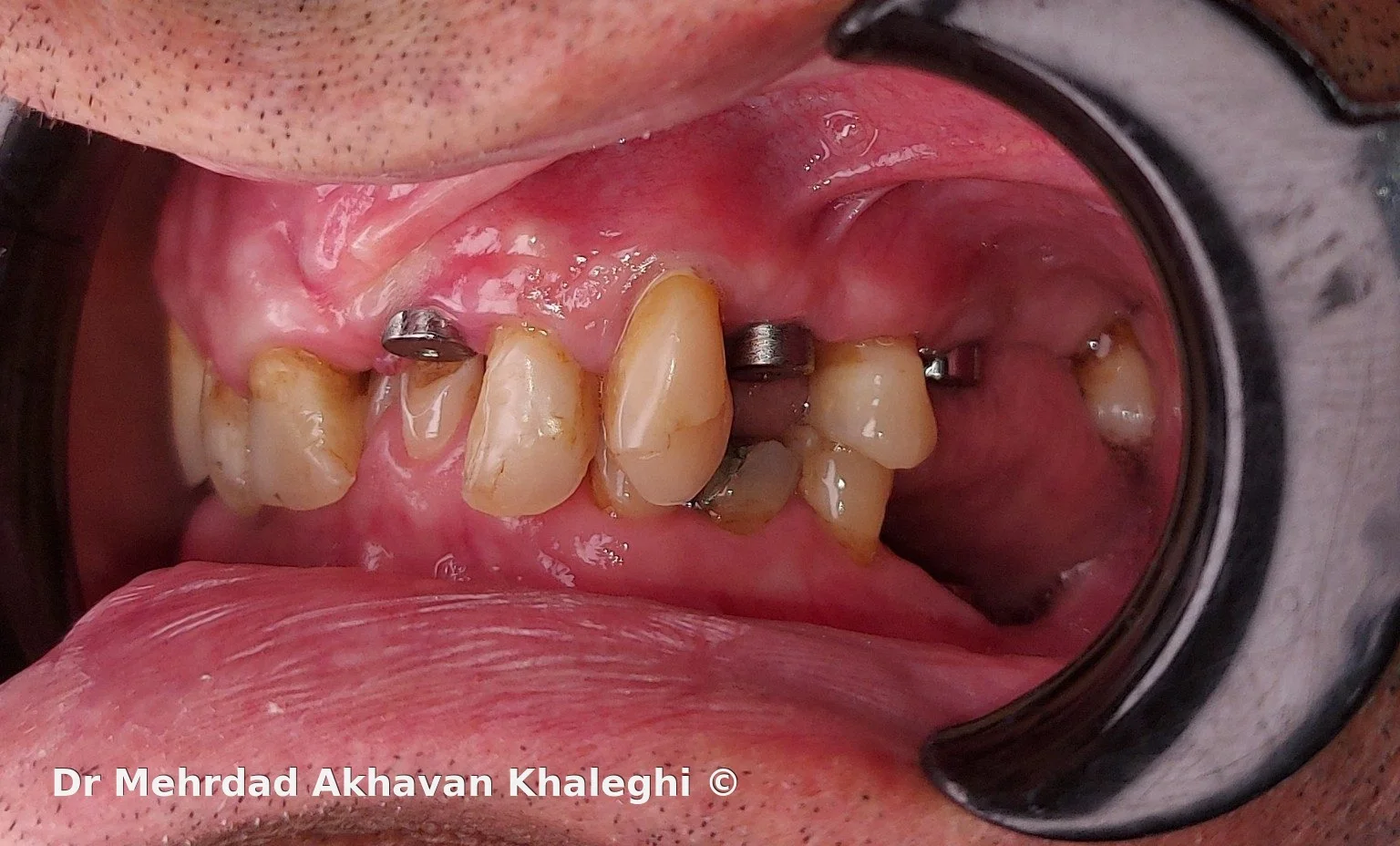
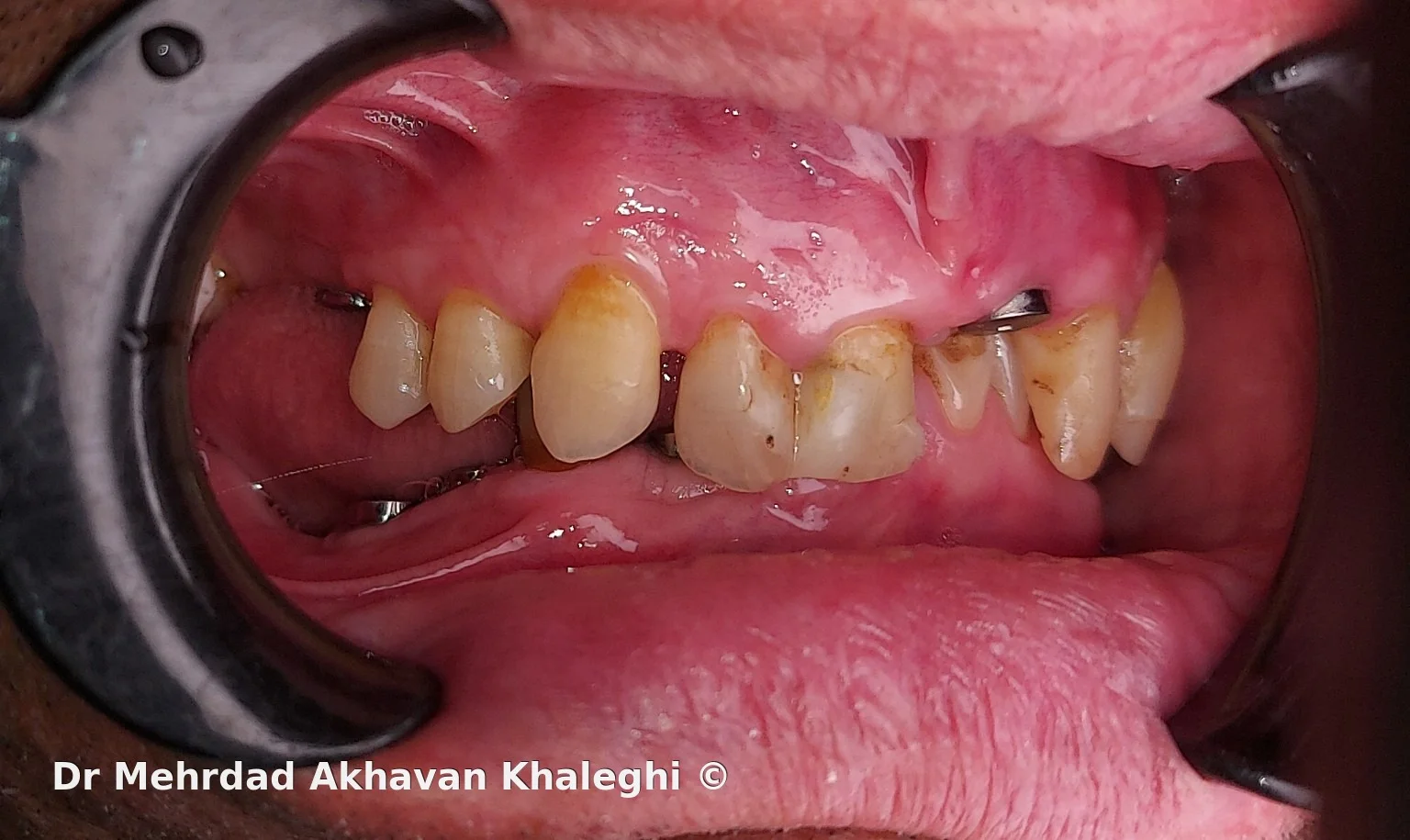
One anterior tooth was mobile at the start of treatment, and the clinical findings were compatible with trauma from occlusion. That finding was an early reminder that the problem could not be reduced to individual teeth.
After posterior support was re-established and the occlusal environment was corrected, the mobility resolved clearly during follow-up. In other words, part of the treatment of that anterior tooth came not from doing more to the tooth itself, but from changing the system in which it functioned.
Treatment planning
Before surgery, the prosthetic endpoint had to be defined
Because restorative space was limited and the jaw relationship was complex, a more reliable picture of the intended prosthetic endpoint was needed before implant positions could be finalized. A temporary removable prosthesis was used to evaluate the available space, followed by a mock-up to establish the approximate tooth positions across both the dentate and edentulous areas.
Implant positions should follow the intended prosthetic outcome—not the other way around, with the prosthesis later forced to compensate for surgically determined implant positions. That is the practical meaning of prosthetically driven treatment planning: the restorative endpoint has to inform the surgical plan from the beginning.
An index was therefore made from the mock-up, and implant positions were planned around that prosthetic design. Implant surgery was performed by a periodontist, after which the required endodontic procedures and restorations of carious or endodontically treated teeth were completed according to the condition of each tooth.
Even then, the most important part of the decision-making was still ahead. A design can look entirely reasonable on a model and still behave differently once the patient starts functioning with it.
Evaluation phase
Two months in provisionals: testing the treatment while it was still adjustable
The provisional restorations remained in function for approximately two months. This was not simply a waiting period between preparation and definitive fabrication; a significant part of the clinical decision-making was still taking place during those two months.
During this period, the patient’s tolerance of the new vertical dimension, muscle and temporomandibular joint status, occlusal stability, tooth mobility, and contacts during lateral and protrusive movements were monitored. Interferences that appeared during real function were corrected progressively, allowing the occlusal scheme to mature before it was transferred to the definitive restorations.
There is an important difference between designing an occlusion and seeing how that occlusion behaves in a patient’s mouth. A scheme may make perfect sense on an articulator, but the patient has to chew, speak, and function with it for years. For that reason, these changes were tested while they were still relatively easy to modify.
Once the patient was comfortable with the new conditions and the occlusal relationships had been refined in the provisionals, those tested relationships became the reference for the definitive reconstruction.
Definitive treatment
A full-mouth rehabilitation does not mean preparing every tooth the same way
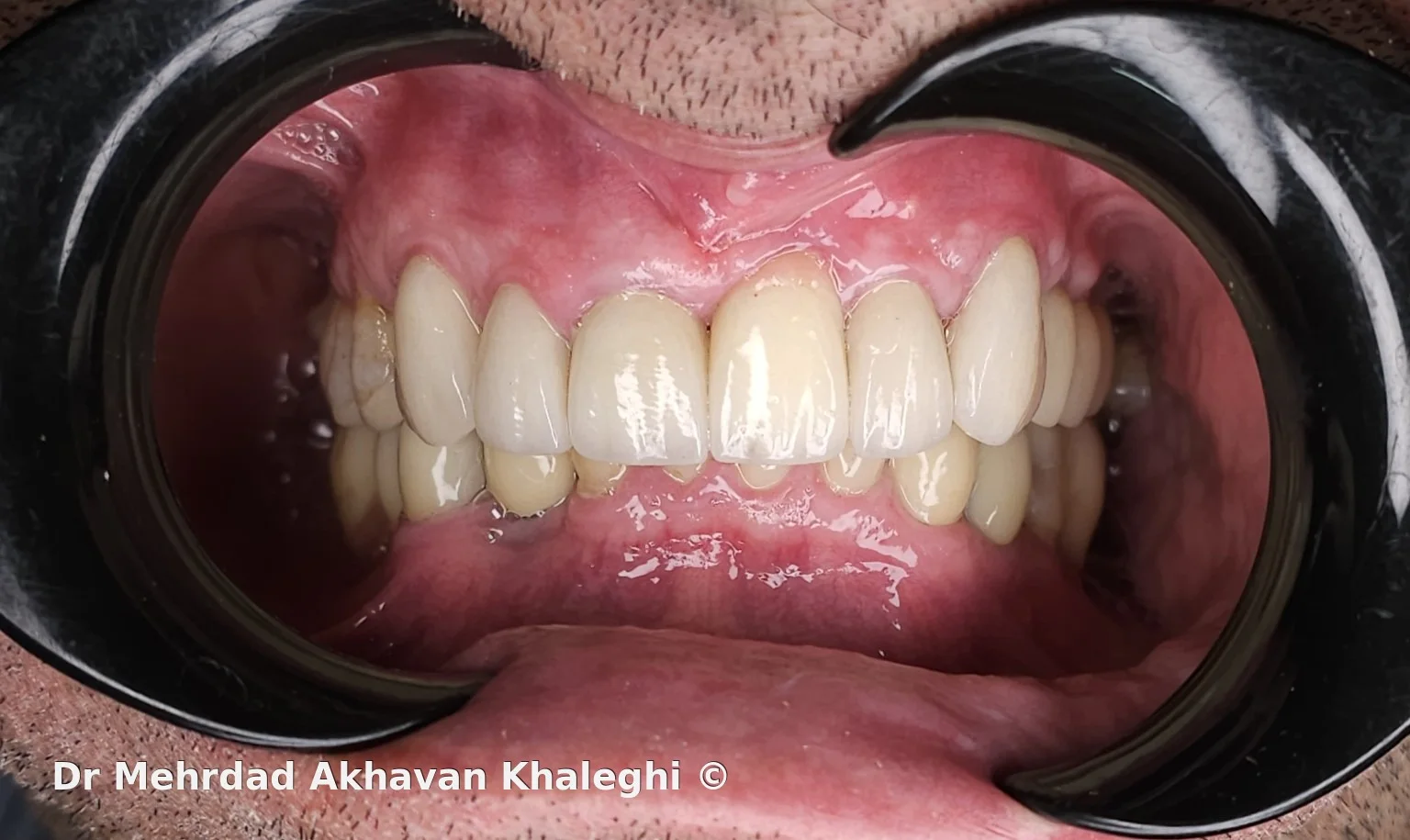
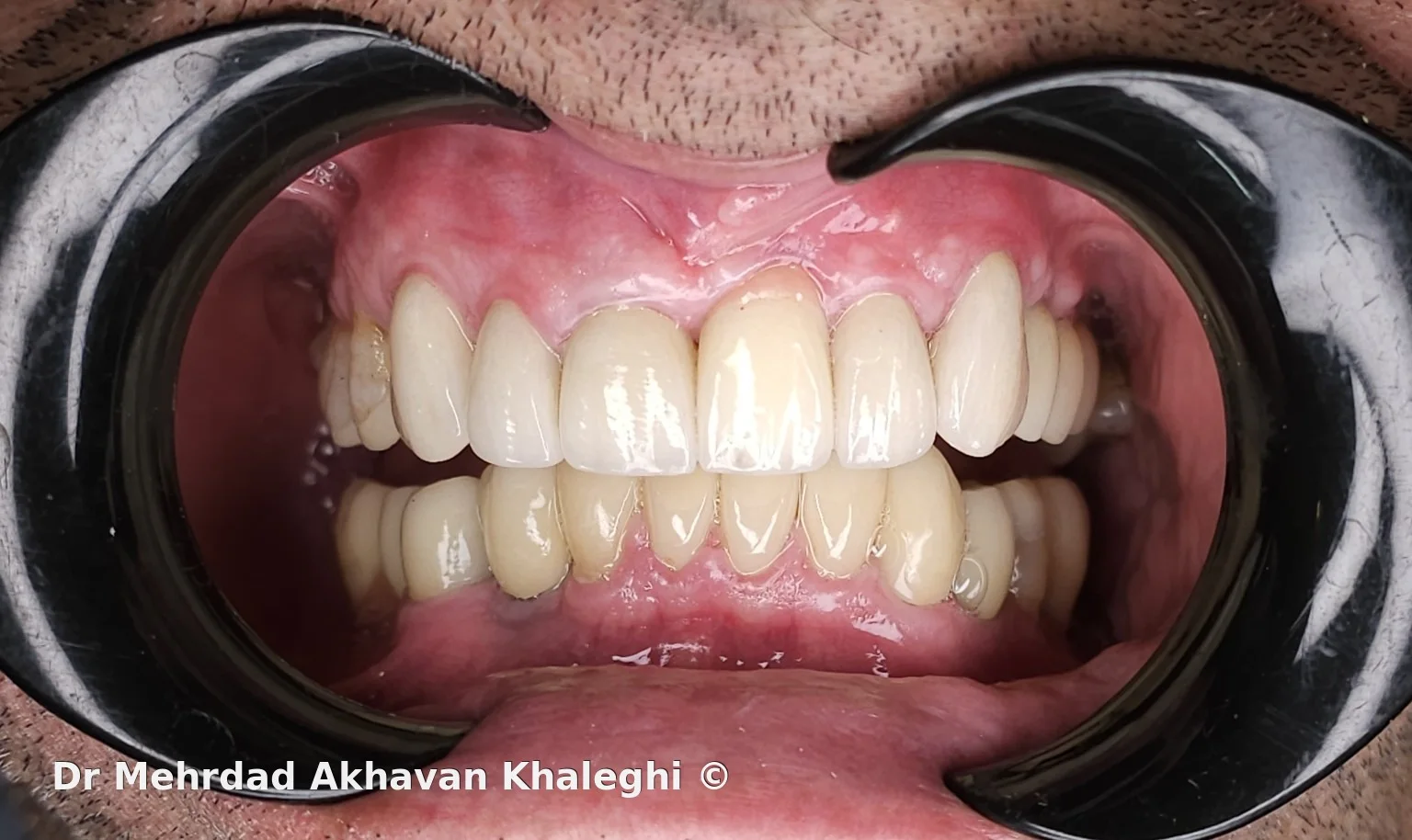
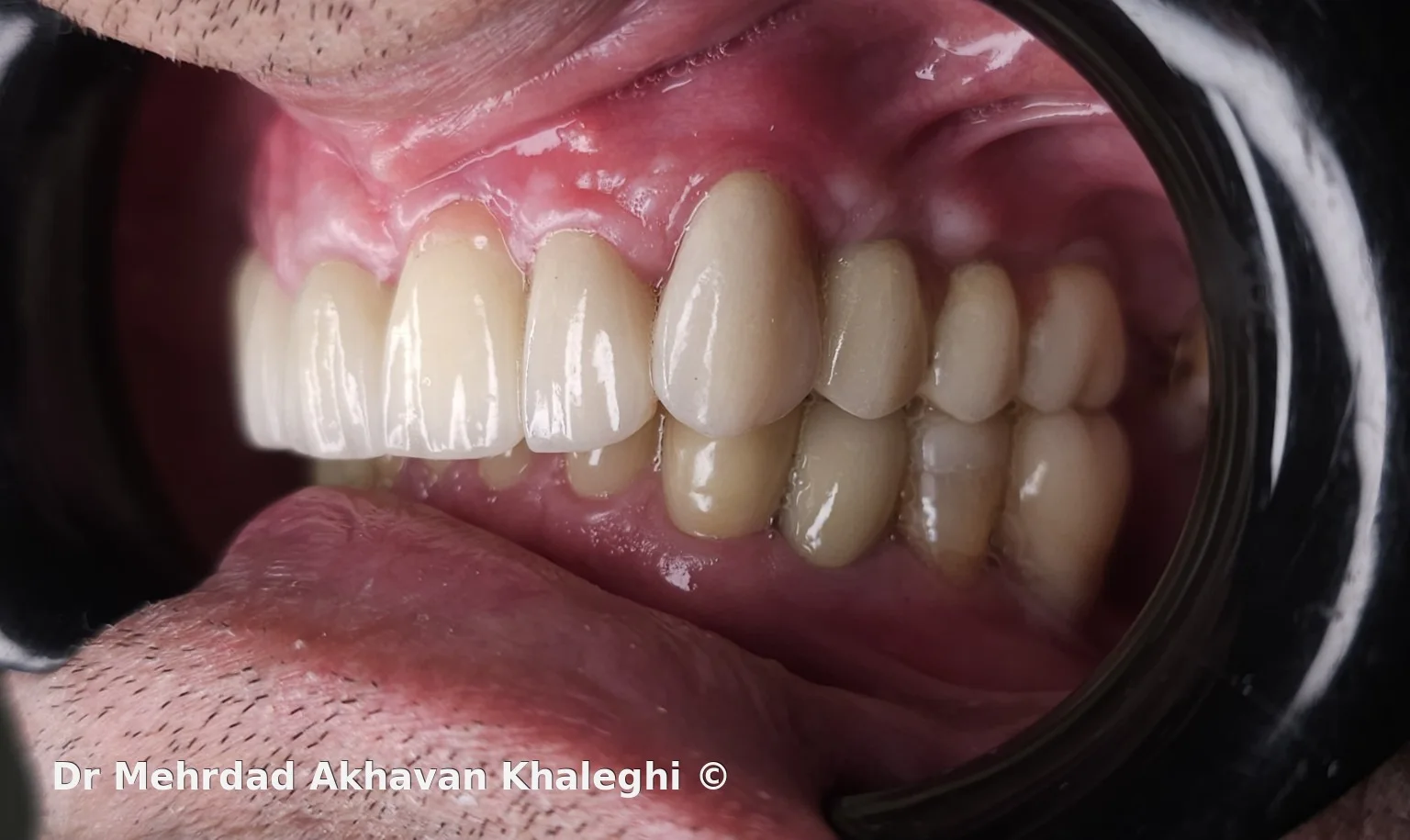
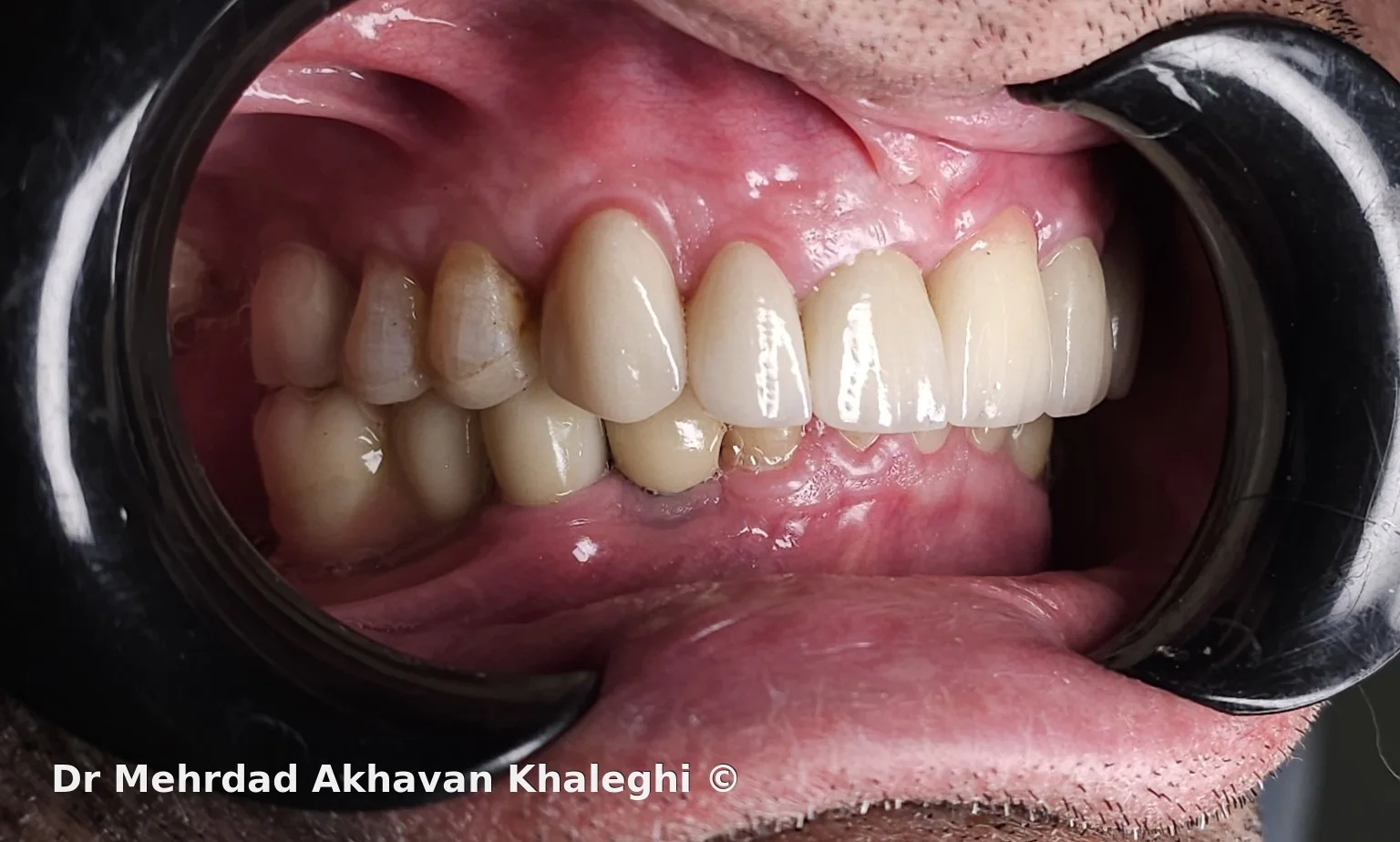
Most of the definitive restorations were fabricated in layered zirconia. The final occlusal scheme used canine guidance during lateral excursions and anterior guidance with posterior disclusion during protrusive movement. The important point was that these relationships were not introduced for the first time in the definitive restorations; they had already been tested and refined in the provisional phase.
The scale of the rehabilitation also did not mean that every tooth had to receive the same preparation. Teeth 14 and 15 allowed a more conservative approach, so additive occlusal overlays were used rather than conventional full-coverage crowns, with preparation limited to the surface conditioning required for resin bonding.
That distinction matters. Once many teeth are being restored, it is easy for treatment to become a uniform protocol in which every tooth is prepared in roughly the same way. The condition of each individual tooth should determine how much intervention it receives. If the prosthetic objective can be achieved while preserving more sound tissue, being part of a full-mouth rehabilitation is not, by itself, an indication for full coverage.
Follow-up
Three years later: definitive delivery was not the end of evaluation
The documented follow-up period is approximately three years. No major complication was reported, although occlusal adjustment was required on two occasions.
I do not see those adjustments as something separate from the treatment outcome—or something to hide. In an extensive rehabilitation in which vertical dimension and occlusal relationships have been changed, delivery is not the end of evaluation. It is the point at which the patient begins using the system we created over the long term, and follow-up gives us the opportunity to see how that system behaves in real function.
What matters most in this case is not the number of restorations. It is that, wherever possible, irreversible decisions were made only after a testable stage: prosthetic space was evaluated before surgery, implant positions followed the intended prosthetic result, vertical dimension and occlusion were tested for about two months in provisionals, and the amount of intervention on each tooth was still determined by the condition of that tooth.
In a case like this, a provisional restoration is not simply a temporary restoration. It is an opportunity to test part of the treatment hypothesis in the patient’s mouth before that hypothesis becomes a definitive and far less reversible decision. Durability does not mean a treatment that never needs maintenance; it means a treatment whose behavior can be followed, evaluated, and corrected when necessary over time.
Clinical case and photography © Dr Mehrdad Akhavan Khaleghi. Unauthorized use or reproduction prohibited.