Clinical Case 12
Root-Supported Overdenture: When a Medical Limitation Changed the Treatment Path
A 65-year-old man presented with loose removable prostheses and difficulty chewing. His diabetes was being managed with insulin, but blood glucose levels fluctuated substantially during the day. Treatment planning therefore could not be based on the oral condition and prosthetic options alone. After consultation with a periodontist and an endocrinologist, implant surgery was not considered an appropriate option at that time, so the rehabilitation was planned without relying on surgical treatment.
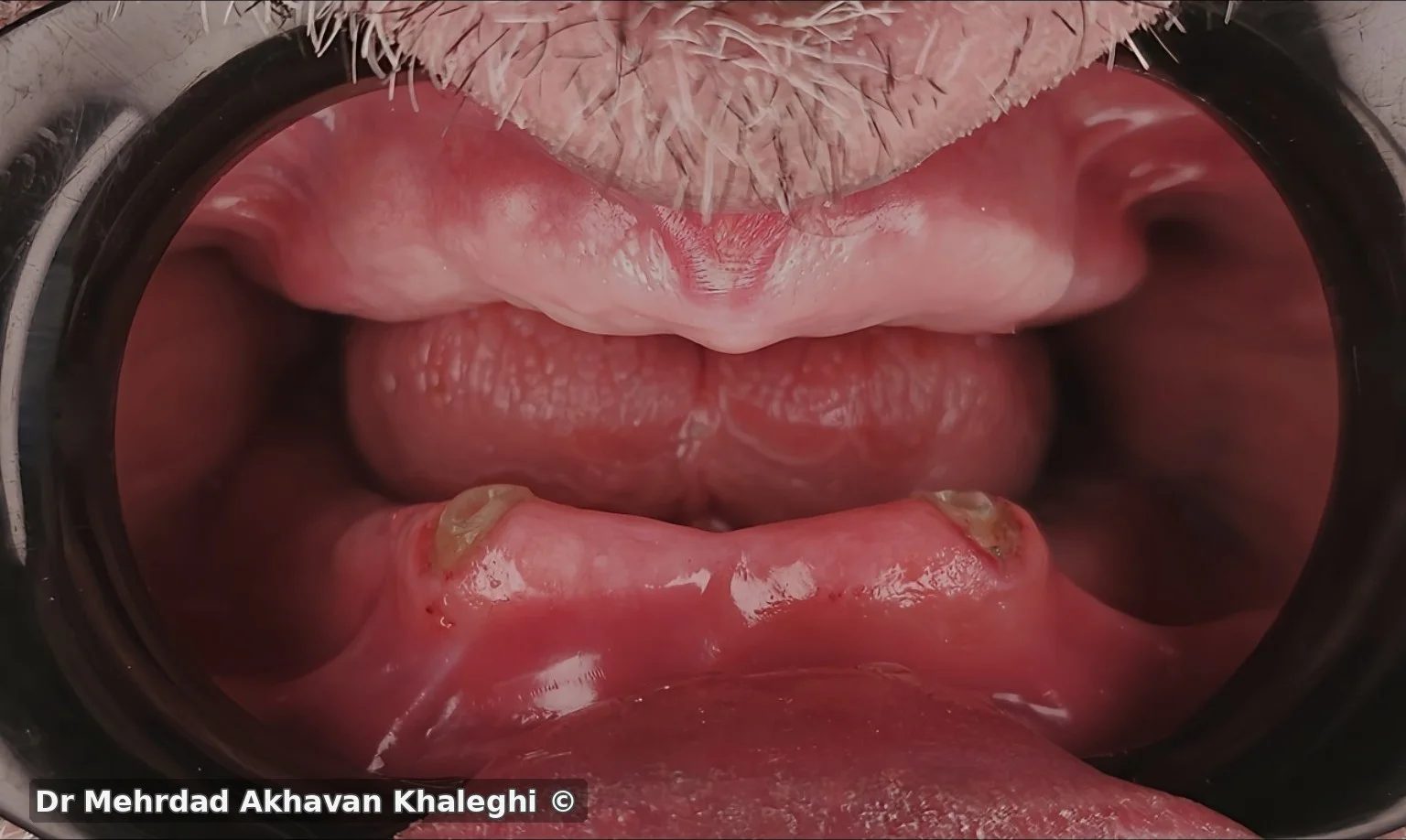
Only two mandibular canines, teeth 33 and 43, remained. Both had inadequate previous endodontic treatment, and their coronal structures were carious and unsuitable for prosthetic use in their existing condition. Periodontally and structurally, however, both canines still had a favorable prognosis, and there was no independent reason to extract them even apart from the medical limitation. They ultimately became central to the treatment design.
Initial condition and medical limitation
When the main constraint extends beyond the mouth
The patient's loose prostheses were the presenting complaint, but the more important constraint came from his systemic condition. Insulin therapy itself was not the issue; the relevant factors were unstable glycemic control and the clinical judgment of the treating specialists. Under those circumstances, implant surgery was not considered a practical treatment option at that stage.
This should not be interpreted as a permanent contraindication to implant therapy in patients with diabetes. The decision was specific to this patient, his glycemic status at the time, and the interdisciplinary assessment. The objective was therefore not to find a second-best substitute for implants, but to select a rehabilitation that remained biologically, functionally, and prosthetically defensible under the patient's actual medical circumstances.
Treatment decision
Using what was still worth preserving
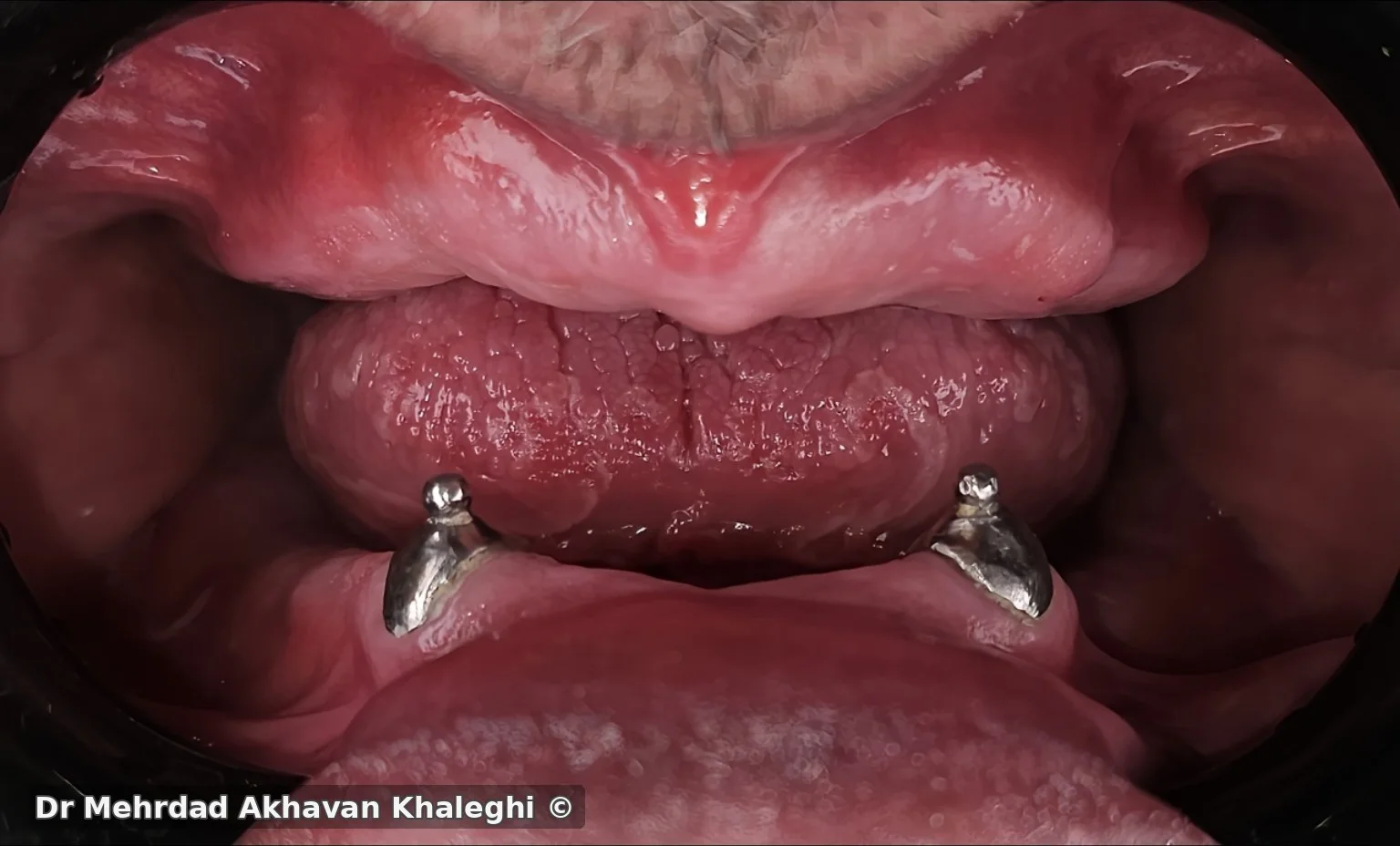
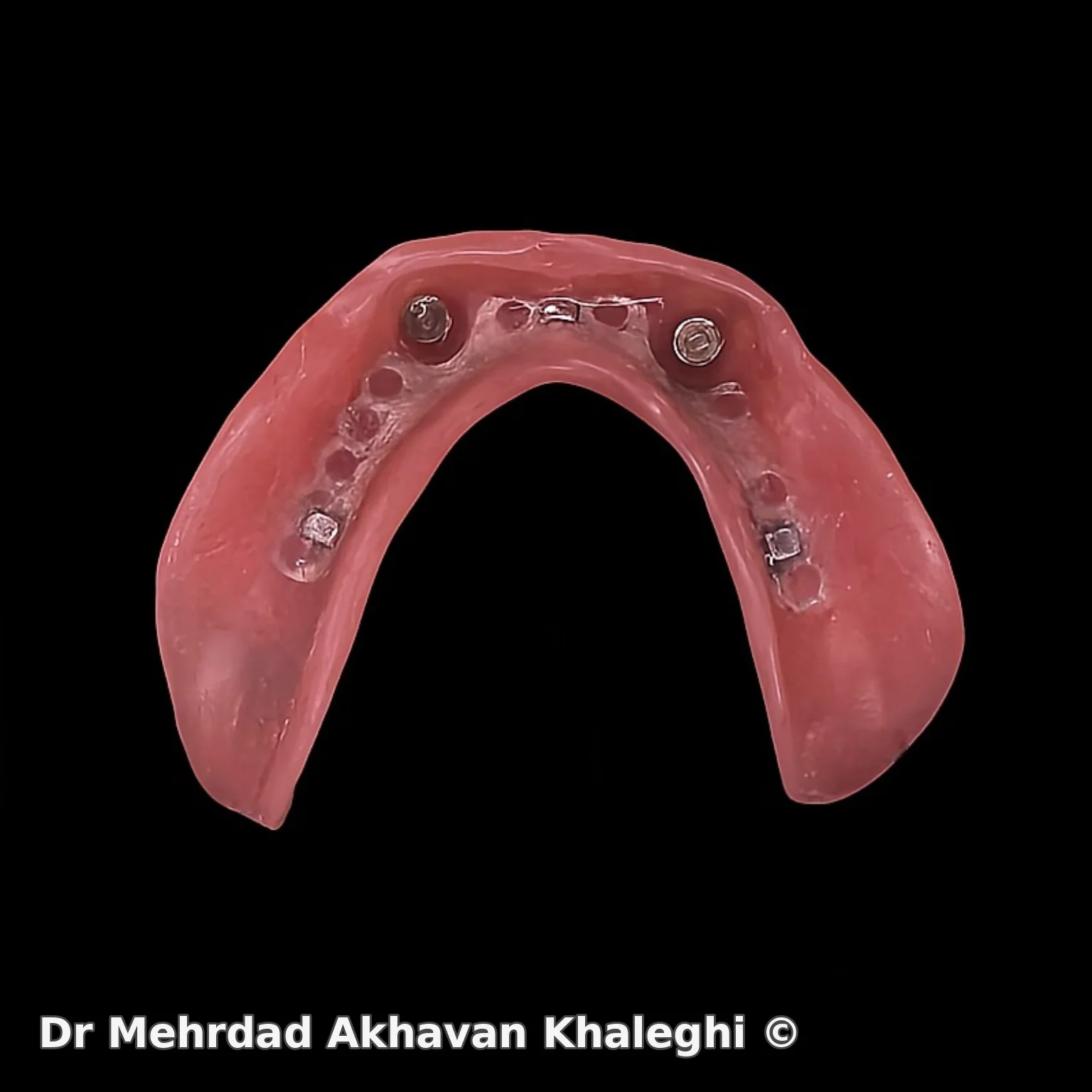
Teeth 33 and 43 were worth preserving independently of the patient’s medical limitation. Both canines underwent endodontic retreatment, and the compromised coronal structures were prepared to receive post-ball attachments so the roots could serve as overdenture abutments. Their preservation was therefore not merely an emergency substitute for implant treatment; retaining reliable natural structures was itself part of the treatment logic.
The definitive plan consisted of a conventional complete denture in the maxilla and a mandibular root-supported overdenture retained by two post-ball attachments.
This was not intended as a simplified version of an implant rehabilitation. The logic ran in the opposite direction: the patient's medical condition, the biologic structures that remained maintainable, and the functional problem were established first; the prosthetic design was then built around those realities.
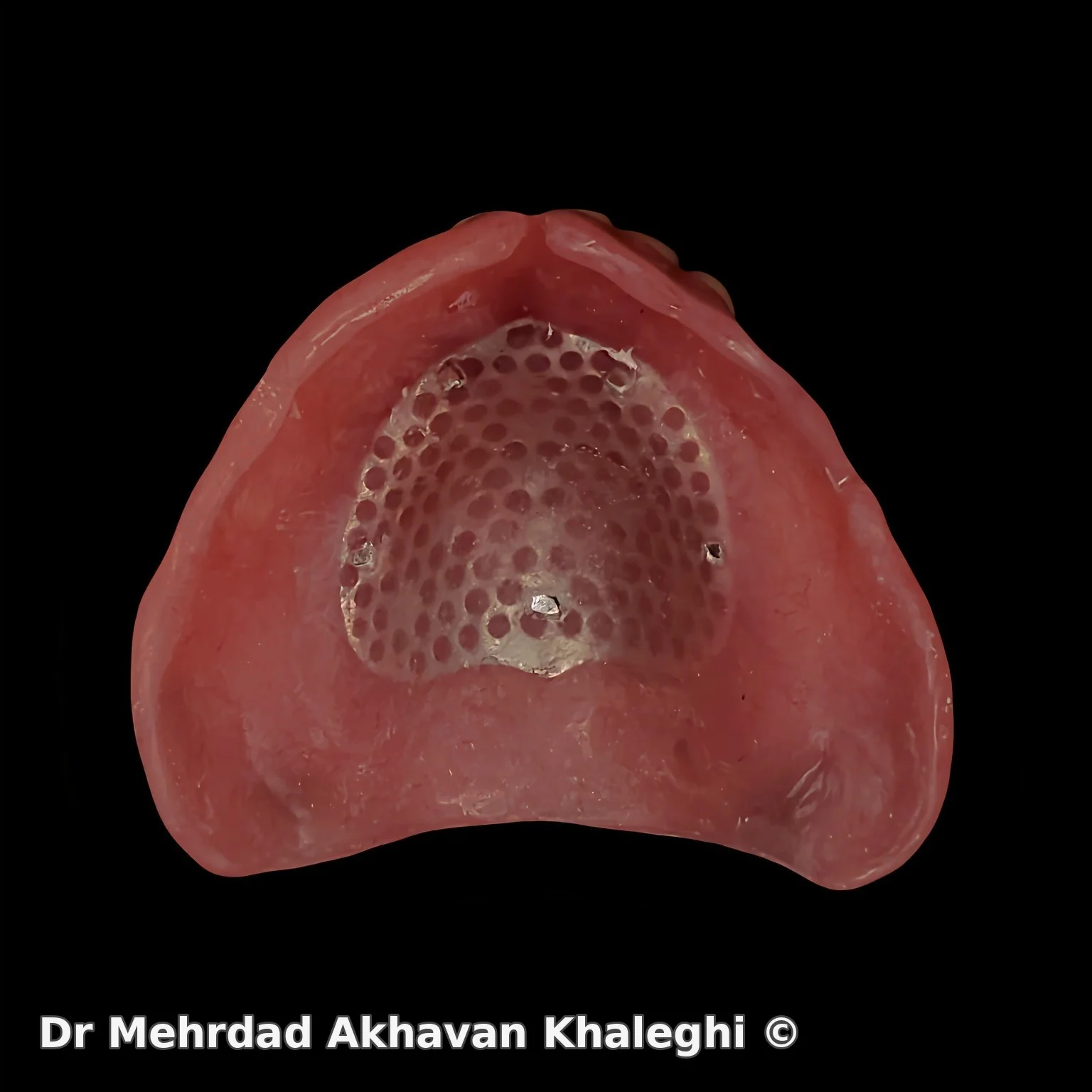
Structural design and occlusion
Removable prosthodontics still requires biomechanical design
A removable prosthesis does not become biomechanically simple merely because it is removable. Both prostheses incorporated metal reinforcement. One reason for reinforcing the maxillary complete denture was the greater functional loading expected from the opposing arch, where a root-supported attachment-retained overdenture was present rather than a conventional complete denture.
Bilateral balanced occlusion was established for both prostheses to distribute occlusal contacts more deliberately and support prosthesis stability during eccentric movements. This was a case-specific design decision, not a recommendation that the same occlusal scheme should be prescribed for every similar patient.
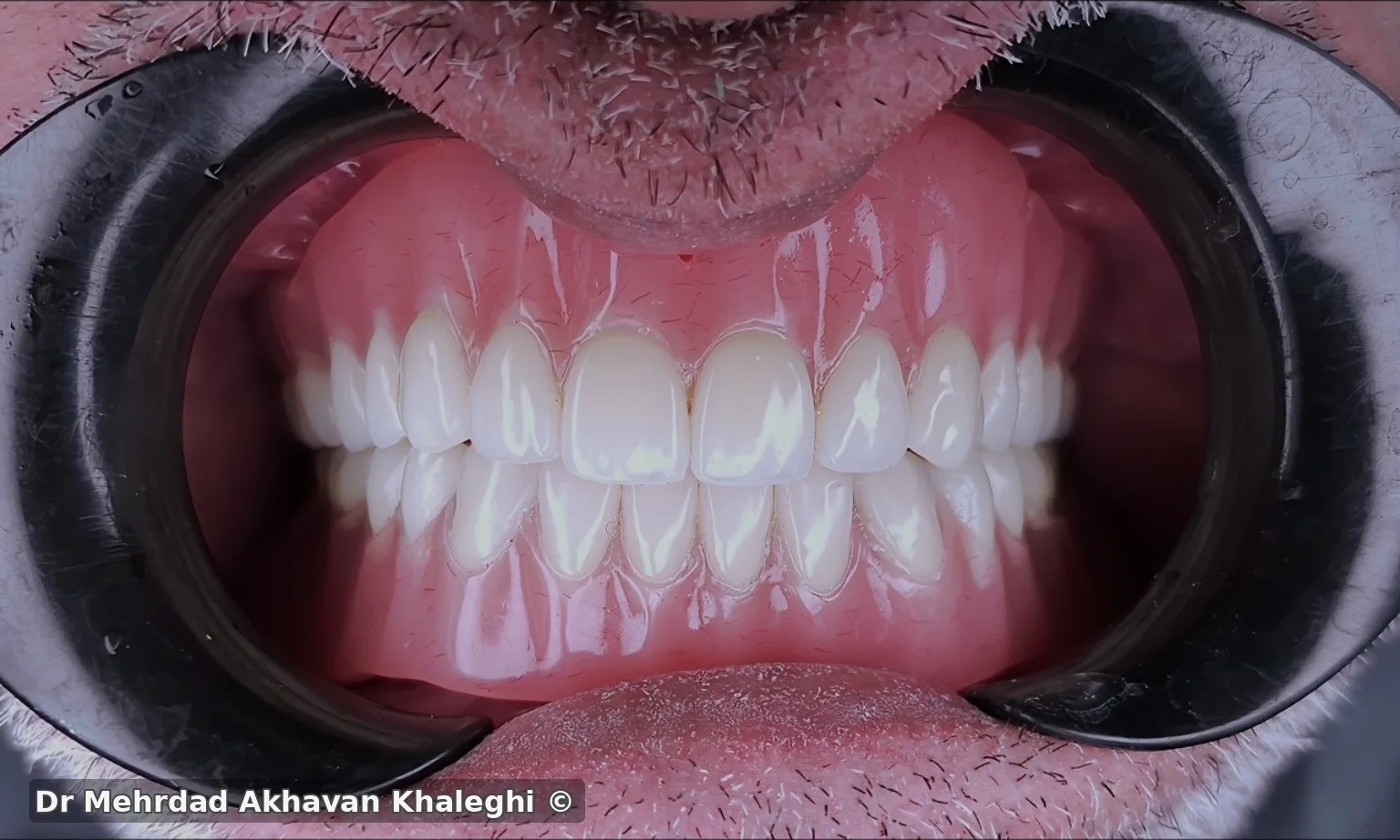
Treatment outcome
Improved function within a defensible treatment boundary
After delivery, retention and stability improved compared with the initial condition. The patient also reported improved chewing ability and was satisfied with the treatment.
The significance of the case was not simply that two post-ball attachments increased overdenture retention. Two roots that still had biologic and prosthetic value were used deliberately to improve function and stability without crossing the medical boundary that had shaped the treatment plan.
In that setting, adding implants at any cost was neither necessary nor defensible. Preserving two maintainable roots allowed a more retentive prosthesis with a manageable maintenance pathway to be designed without exposing the patient, at that time, to surgery that had not been considered appropriate for him.
Follow-up
Four years of clinical and radiographic review
The patient was followed clinically and radiographically for approximately four years. A few denture sore spots required adjustment early after delivery. Thereafter, no reline, fracture-related repair, attachment maintenance, or abutment-root maintenance was reported during the follow-up period, and the rehabilitation remained stable.
This is the outcome of one patient and should not be interpreted as evidence that post-ball attachments or root-supported overdentures are categorically superior to other treatment options. Long-term performance depends on multiple factors, including root maintainability, endodontic quality, prosthetic design, occlusal control, hygiene, patient cooperation, and continued follow-up.
Conclusion
The medical limitation did not stop treatment; it changed the treatment path
In this case, the medical limitation did not stop treatment; it changed the treatment path. Implant surgery was not an appropriate option at that stage, but the two remaining mandibular canines still had biologic and prosthetic value. After their endodontic condition was corrected, the roots could be used to retain a mandibular overdenture and improve function without exceeding the patient's systemic limitations.
For this patient, appropriate treatment did not mean choosing the most complex option available. The more defensible decision was to preserve two usable roots and design a prosthesis that addressed the functional problem while remaining maintainable over time. The medical limitation changed the treatment path; it did not change the value of structures that were still worth preserving.
Clinical case and photography © Dr Mehrdad Akhavan Khaleghi. Unauthorized use or reproduction prohibited.