Clinical Case 13 · Short educational case
Essix Provisional During Osseointegration
Maintaining esthetics while minimizing unintended pressure and loading at the surgical sites
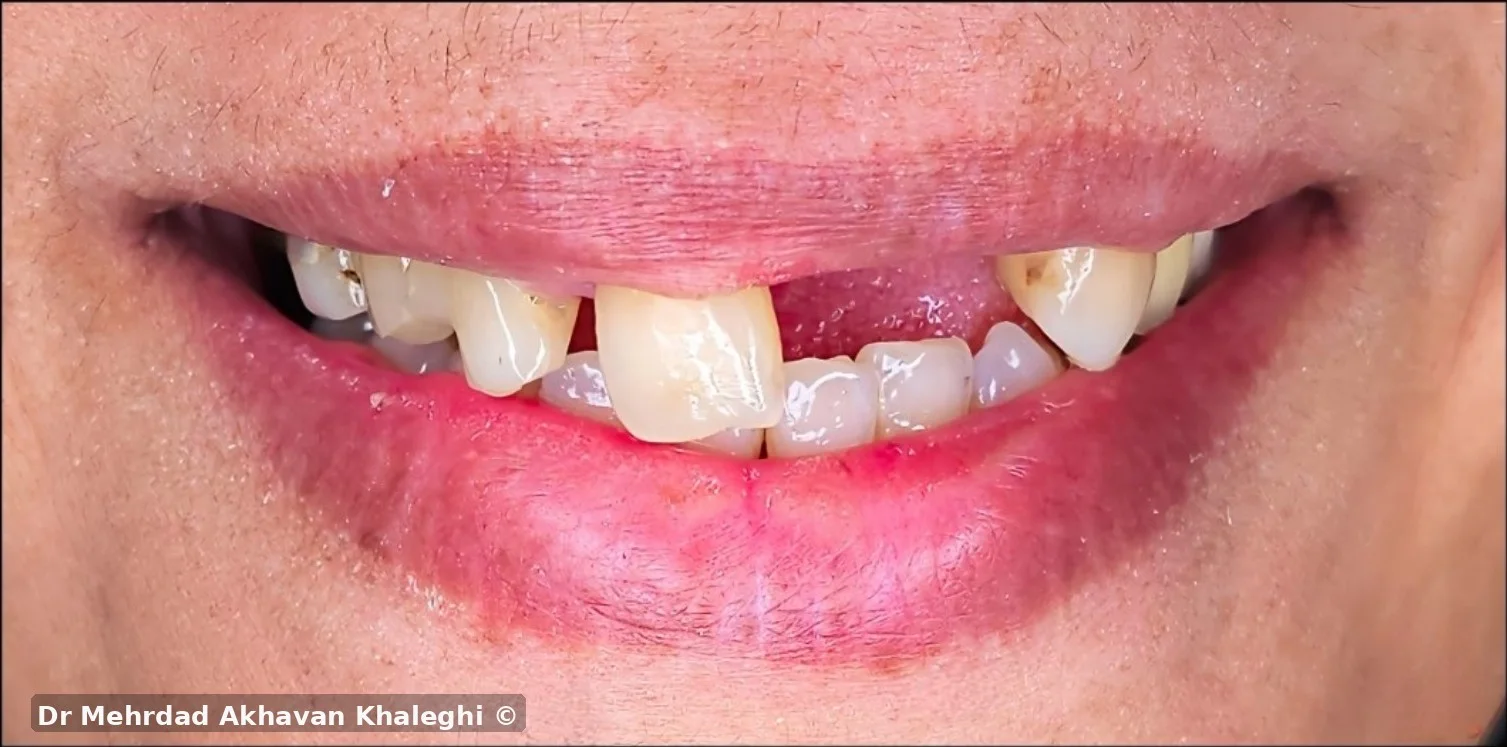
A 37-year-old woman presented after trauma had caused root fractures in teeth 21 and 22, leaving both teeth non-restorable. One implant was placed at each site. The challenge, however, was not only how to replace the teeth definitively; she also needed an acceptable anterior solution throughout the osseointegration period.
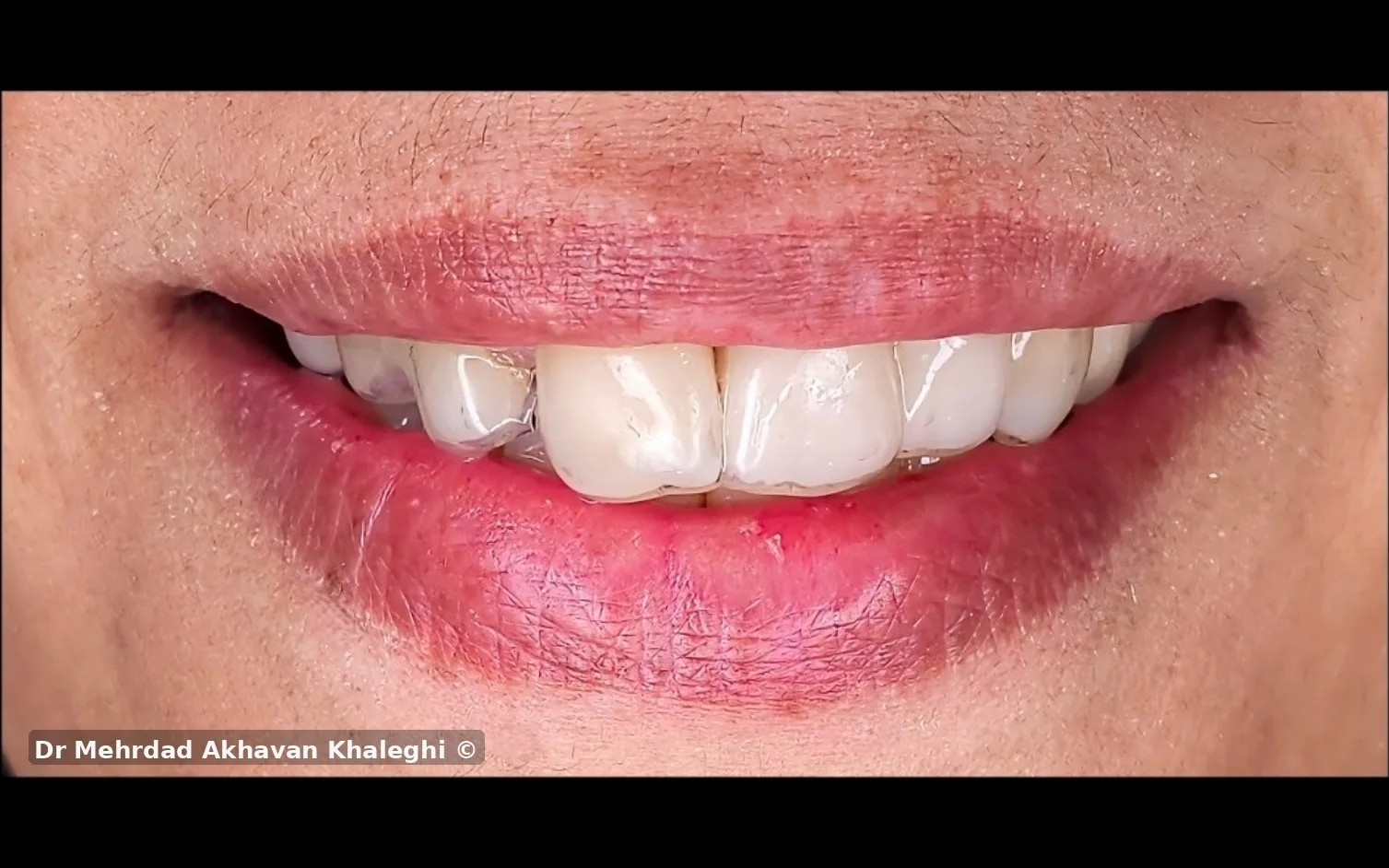
An Essix appliance was used during this period. The goal was to maintain the appearance of the smile while minimizing unintended pressure and loading at the surgical sites and newly placed implants. The appliance had complete relief over the surgical areas and was supported only by the remaining teeth.
Initial situation
Maintaining appearance without turning the provisional into a source of loading
The key design decision
The Essix had to respect the surgical plan, not only the smile
The two prosthetic teeth in the Essix were deliberately kept completely out of occlusion—both in MIP and during eccentric movements. The appliance was not intended to function as a load-bearing prosthesis; it was an esthetic interim solution designed to remain compatible with healing around the newly placed implants.
The important point in this case is not the Essix itself. A provisional restoration in the esthetic zone should not be designed independently of the surgical plan. It may look acceptable, but if its support, relief, and occlusal contacts are not controlled, the same appliance intended to make the healing period easier for the patient can work against the primary treatment objective.
In this patient, two objectives had to be met at the same time: her appearance during osseointegration and the mechanical protection of the fresh implant sites. The provisional therefore had to remain as independent of the surgical areas as possible and avoid unintended loading of the implants.
MIP
No contact
Eccentric movements
No contact
Support
Remaining teeth only
Relief
Complete relief over surgical sites
Definitive treatment and documentation limitation
State what is documented — and no more
After osseointegration, the definitive treatment was completed with layered zirconia all-ceramic restorations. Final photographs of those restorations are not available in the current archive. For that reason, this page is intentionally presented as an educational case about interim prosthetic management rather than as a complete photographic record of the definitive implant outcome.
That limitation does not reduce the educational value of the case as long as the boundary of the documentation is stated clearly. What can be shown here is the reasoning behind the provisional design and its role during healing; the page therefore makes no stronger visual claim about the definitive result than the available record can support.
Conclusion
Conclusion
For me, the value of this case lies in a relatively simple but important detail: an interim prosthesis during osseointegration is not made merely to fill an empty space. The Essix had complete relief over the surgical sites, support from the remaining teeth, and the replacement teeth were kept out of contact in MIP and eccentric movements. The goal was to reduce direct pressure and unintended loading as much as possible during healing. An interim prosthesis should not only preserve appearance; it should also be compatible with the biology of the treatment stage in which it is being used.
Clinical case and photography © Dr Mehrdad Akhavan Khaleghi. Unauthorized use or reproduction prohibited.