Clinical Case 15
When Anterior Rehabilitation Begins Posteriorly
A staged rehabilitation for severe tooth wear: testing vertical dimension, designing occlusion, and completing definitive treatment with only the intervention each tooth actually required
This patient, a man approximately 60 years old, presented with severe generalized tooth wear and dissatisfaction with the appearance of his teeth. The problem was not merely esthetic. Loss of tooth height and altered occlusal relationships meant that treatment could not reasonably be reduced to simply making a number of new crowns.
The central issue was to establish a reliable functional environment before deciding on the definitive form of the anterior teeth. If tooth length and vertical dimension had been determined primarily from the desired appearance, without first evaluating mandibular movements, occlusal contacts, and the patient’s tolerance of the proposed position, an important part of the treatment decision would have rested on assumption rather than testing.
Diagnostic phase
Before definitive treatment, the proposed position had to be tested
Treatment did not move directly to a new vertical dimension or restore the lost tooth length in a single definitive step. The proposed design was first evaluated with a mock-up and then with provisional restorations, so the patient could function in the new condition before anything was made definitive.
Esthetics was only one part of this assessment. Chewing, phonetics, the patient’s subjective comfort, mandibular movement pathways, and the distribution of occlusal contacts were all evaluated. The increase in anterior tooth length was deliberately conservative and was reassessed during the provisional phase.
This phase was not simply a waiting period before definitive treatment; it was part of the diagnostic and decision-making process itself.
Treatment sequence
Why the rehabilitation began posteriorly
The anterior reconstruction was not finalized until a dependable occlusal scheme had been established.
Not every posterior tooth was covered with a restoration. Teeth 14 and 24 were restored with crowns, while the posterior occlusal plane was otherwise refined with selective grinding and controlled occlusal adjustment, guided by the anterior and lateral guidance that had already been tested in the provisional restorations.
The purpose was to harmonize the posterior contacts and movement pathways with a scheme that the patient had already tolerated during the provisional phase.
The aim was not to cover every posterior tooth simply because a new occlusal scheme was being established. In some teeth, the required change could be achieved through limited, controlled selective adjustment while preserving sound tooth structure.
Full coverage is justified when the individual tooth itself requires it—not merely because that tooth happens to be part of a full-mouth rehabilitation. When the desired occlusal relationship can be achieved with a smaller and controllable intervention, adding a crown or onlay without an independent indication offers no obvious advantage and sacrifices additional sound tissue.
Structure and retention
Increasing clinical height: knowing what is gained and what is lost
Because so much coronal height had been lost, root length and crown-to-root relationships were assessed before surgery to determine whether increasing usable clinical crown height would be periodontally and structurally defensible.
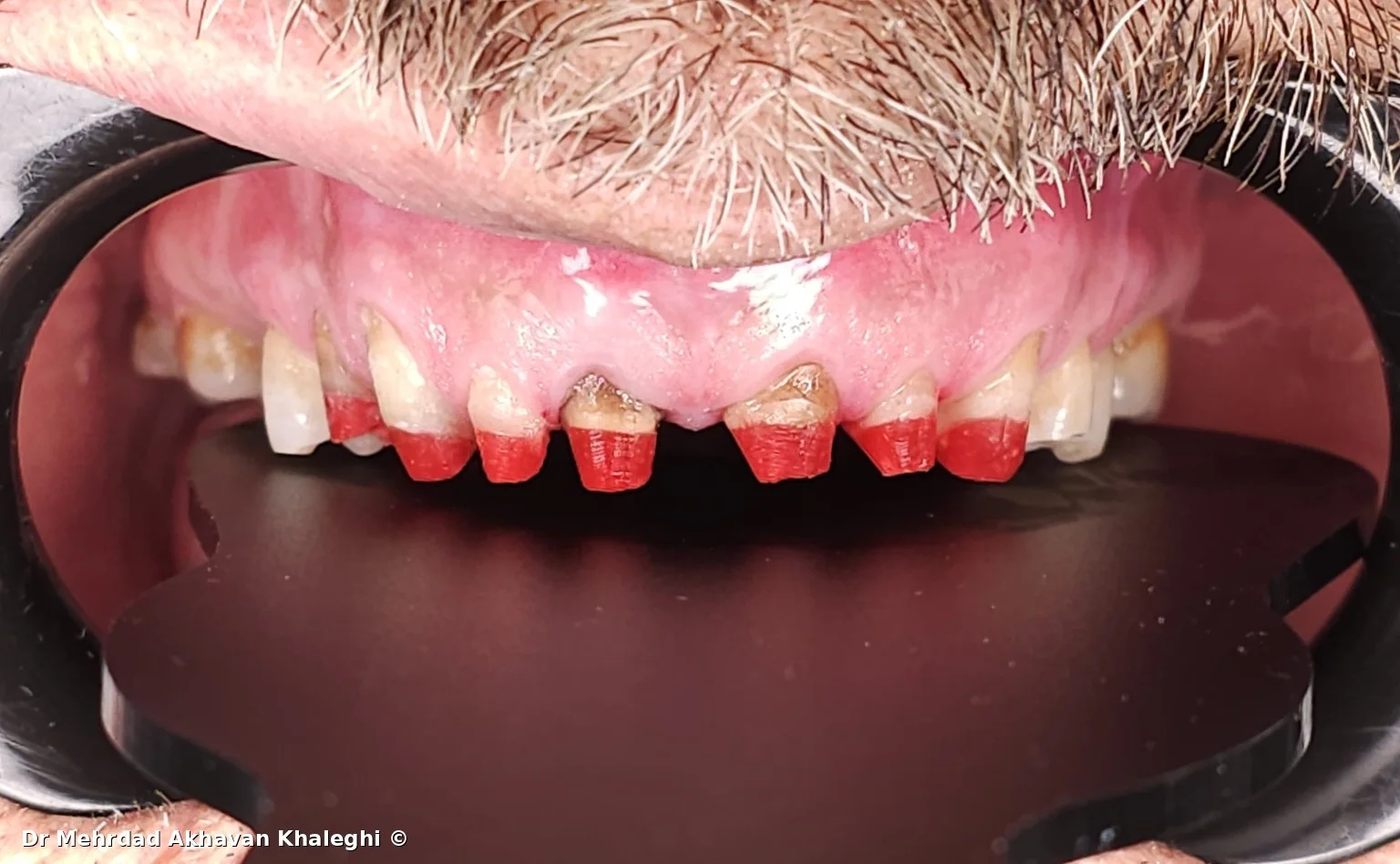
Crown lengthening was performed from the premolar region on one side to the corresponding premolar on the opposite side to increase usable clinical height. Root lengths and crown-to-root relationships were evaluated before surgery, and the planned increase in clinical crown height was judged not to compromise the crown-to-root ratio unacceptably.
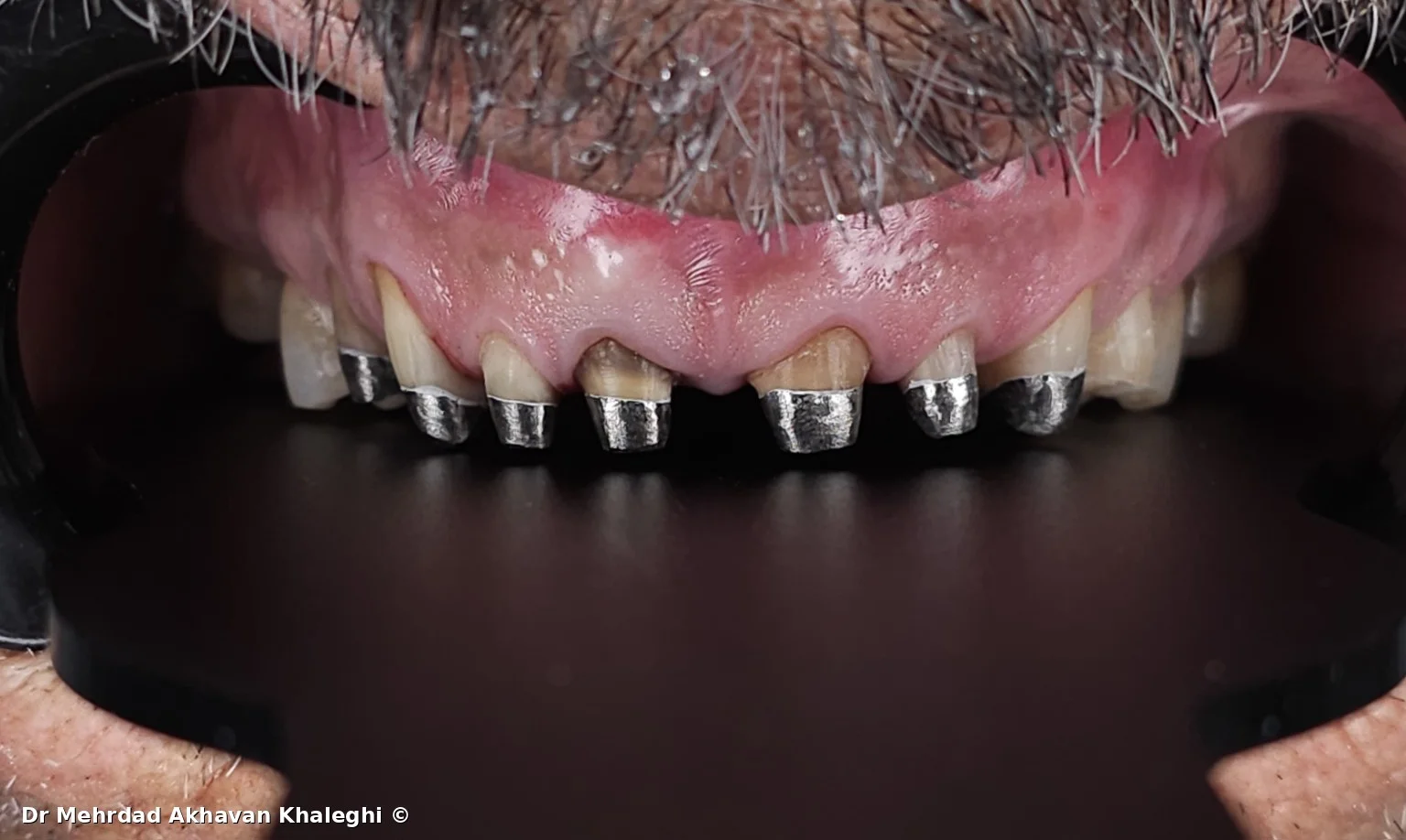
Crown lengthening alone, however, was not sufficient to create favorable geometry in all teeth. Cast post-and-core restorations were used in selected teeth to provide retention for the core reconstruction. A post-and-core was not treated as a substitute for ferrule and was not used to 'create' ferrule.
Resin patterns were first made intraorally for the cast post-and-cores; after casting, the definitive metal post-and-cores were placed clinically.
The key decision was not simply “surgery versus a post.” The objective was to find a combination that could provide adequate restorative geometry without unnecessarily increasing crown length or sacrificing more structure than needed.
Anterior length
Less than what might have been esthetically possible
In patients with severe wear, there is an understandable temptation to recover all of the apparent lost anterior length directly at the incisal edge.
But every millimeter of anterior lengthening is more than an esthetic decision. It can alter anterior guidance, the envelope of function, mandibular movement pathways, and the distribution of forces.
For that reason, incisal lengthening was intentionally limited and the proposed amount was tested in the provisional restorations. The goal was not to restore the greatest possible length, but to reach a tooth length that was esthetically acceptable and functionally tolerable for this patient.
Digital workflow
Digital registration for definitive fabrication
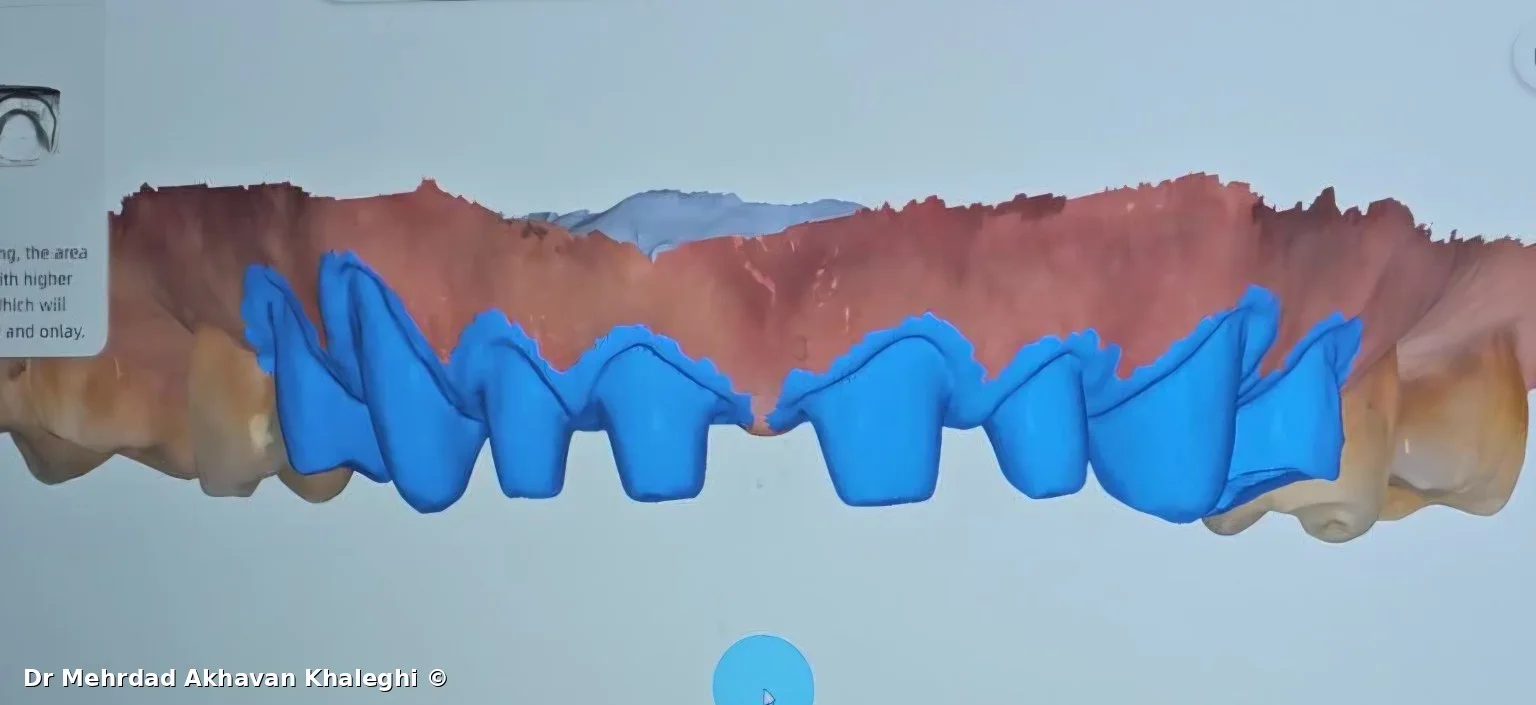
After the preparation stages had been completed and the restorative conditions were considered satisfactory, the dentition was recorded digitally. An intraoral scan was used as the digital impression for transfer to the laboratory phase.
In this case, the relevance of scanning was not simply the use of digital technology. Its role was to transfer the prepared tooth surfaces and the relationships developed and tested during the provisional phase into the definitive fabrication workflow.
Definitive restoration
Zirconia with cut-back and layering
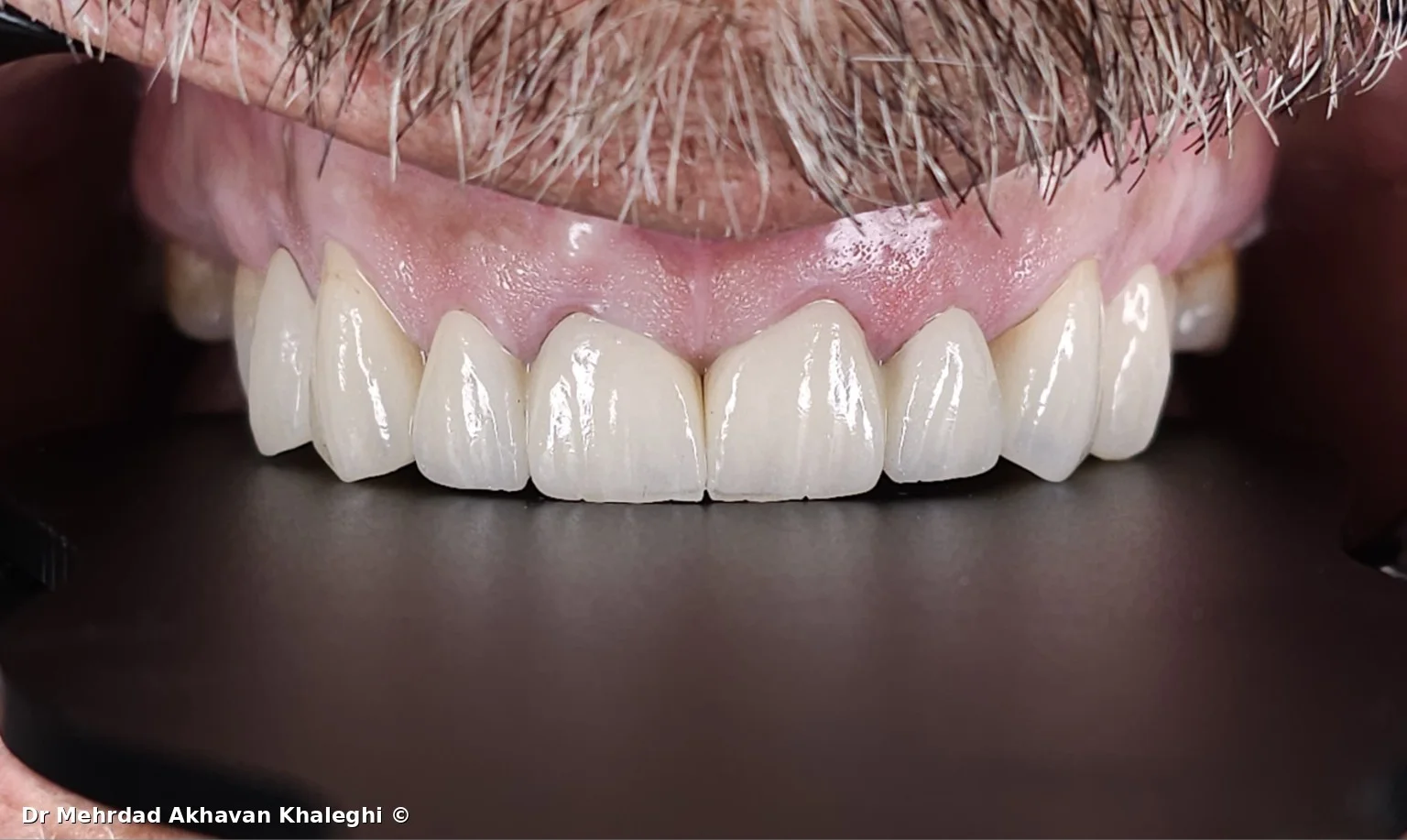
After the occlusal design had been evaluated and stabilized, the maxillary rehabilitation was completed.
The definitive restorations were fabricated in zirconia, with cut-back and ceramic layering where greater esthetic characterization was needed. At the same time, the design aimed to preserve a greater bulk of zirconia in functional areas and to limit veneering ceramic mainly to regions in which it contributed meaningful esthetic value.
The mandibular treatment was not carried out during this stage and was completed later. The sequence therefore mattered: the maxillary rehabilitation and its occlusal relationships were established first, followed by completion of the mandibular rehabilitation in a subsequent phase.
Occlusion
The definitive restoration should not be the first place the design is tested
The definitive occlusal relationships were first created and evaluated in the provisional restorations. After anterior and lateral guidance had been assessed, they became the reference for posterior adjustment, and selective grinding was used to harmonize the posterior plane with the intended movement pathways.
The definitive restorations were therefore not the first place where the occlusal design was tested. The essential relationships had already been created, observed, and modified during the provisional phase.
Put simply, the definitive restoration was not intended to be the testing ground for an idea; most of that idea had already been tested in the provisional restorations.
Approximately five-year follow-up
A good outcome does not mean the absence of complications
The patient was followed for approximately five years, and overall function remained stable. One complication did occur: chipping at the transition between the zirconia bulk and the cut-back/layered ceramic.
That event is an important part of the case and should be stated explicitly when presenting a long-term treatment outcome.
The location of the chipping drew attention to the transition between the zirconia framework and veneering ceramic as a potentially vulnerable area. The affected restoration was remade, and the transition zone was reconsidered in the revised design.
A largely stable rehabilitation with one localized complication is a more truthful picture of long-term treatment than a narrative that implies nothing ever went wrong. Success in an extensive rehabilitation does not mean that no event occurs over several years; what matters is what the complication was, how it was managed, and what could be learned from it for future design.
Conclusion
Sequence of decisions, extent of intervention
The value of this case is not the number of crowns or the visual transformation of the teeth. The central issue was the sequence of decisions and the extent of intervention.
The proposed vertical dimension and anterior length were tested before being made definitive. Root lengths and crown-to-root relationships were assessed before crown lengthening. Guidance was established before the anterior reconstruction was completed, and the posterior dentition was incorporated into the new scheme with selective intervention wherever possible. The later complication was also analyzed as part of the outcome rather than excluded from the story.
Full-mouth rehabilitation does not necessarily mean full-mouth restoration. Part of treatment planning is knowing which teeth truly require restoration and which can be incorporated into a new scheme with a substantially smaller intervention. Full-mouth rehabilitation means rebuilding a system, not necessarily restoring every tooth in that system.
In an extensive rehabilitation, the final tooth form is the last decision—not the first. A system capable of supporting that form over time has to be established first.
Clinical case and photography © Dr Mehrdad Akhavan Khaleghi. Unauthorized use or reproduction prohibited.