Clinical Case 5
Maxillary and mandibular overdentures: when treatment is about more than retention
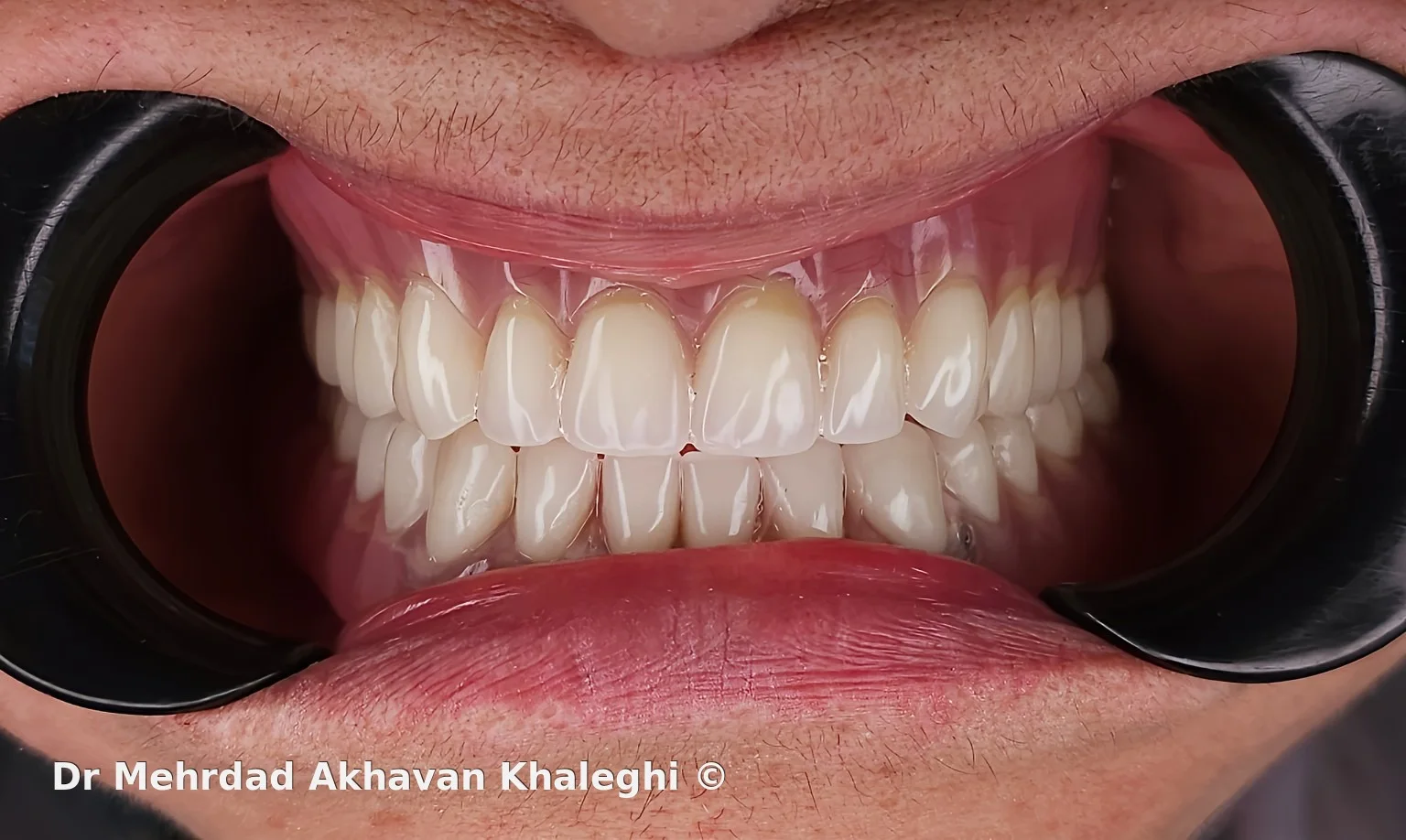
A 68-year-old completely edentulous woman was dissatisfied with the inadequate retention and stability of her conventional complete dentures and with palatal coverage in the maxillary denture. The problem, however, was not simply how to make the prostheses more retentive. Reduced lip support and changes in lower-facial form also affected her appearance, so any new treatment had to address intraoral function and the relationship between the prostheses and the face at the same time.
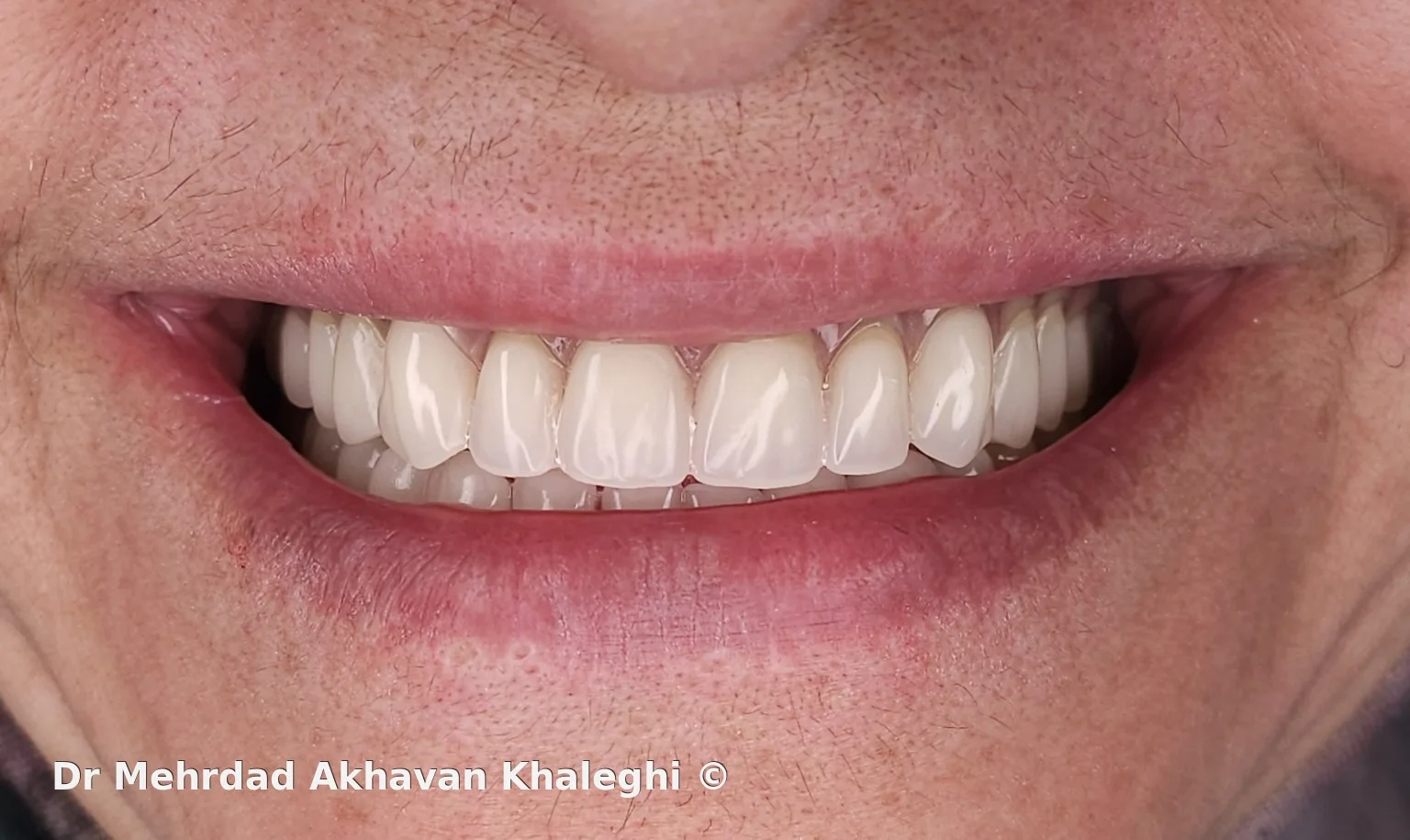
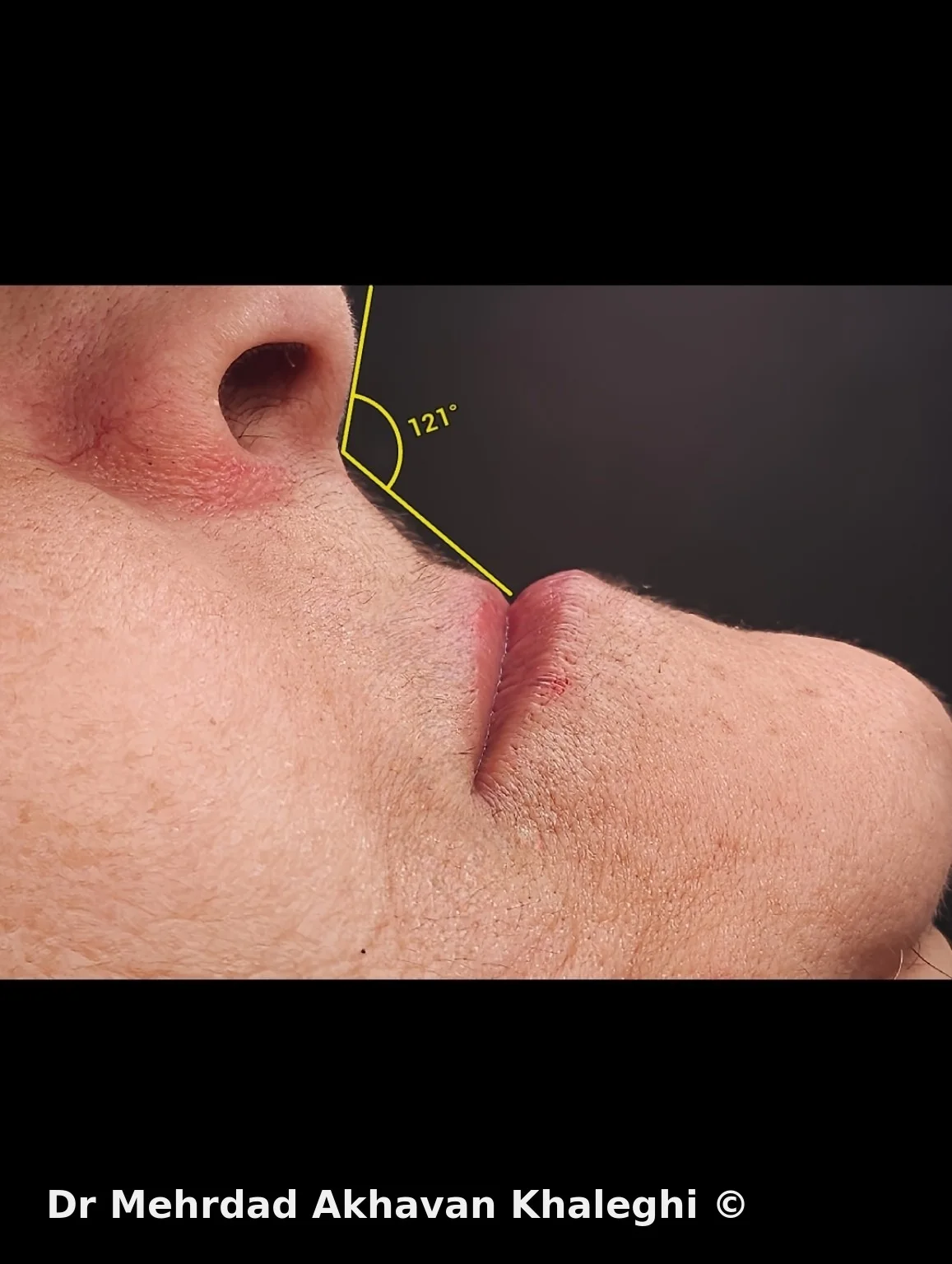
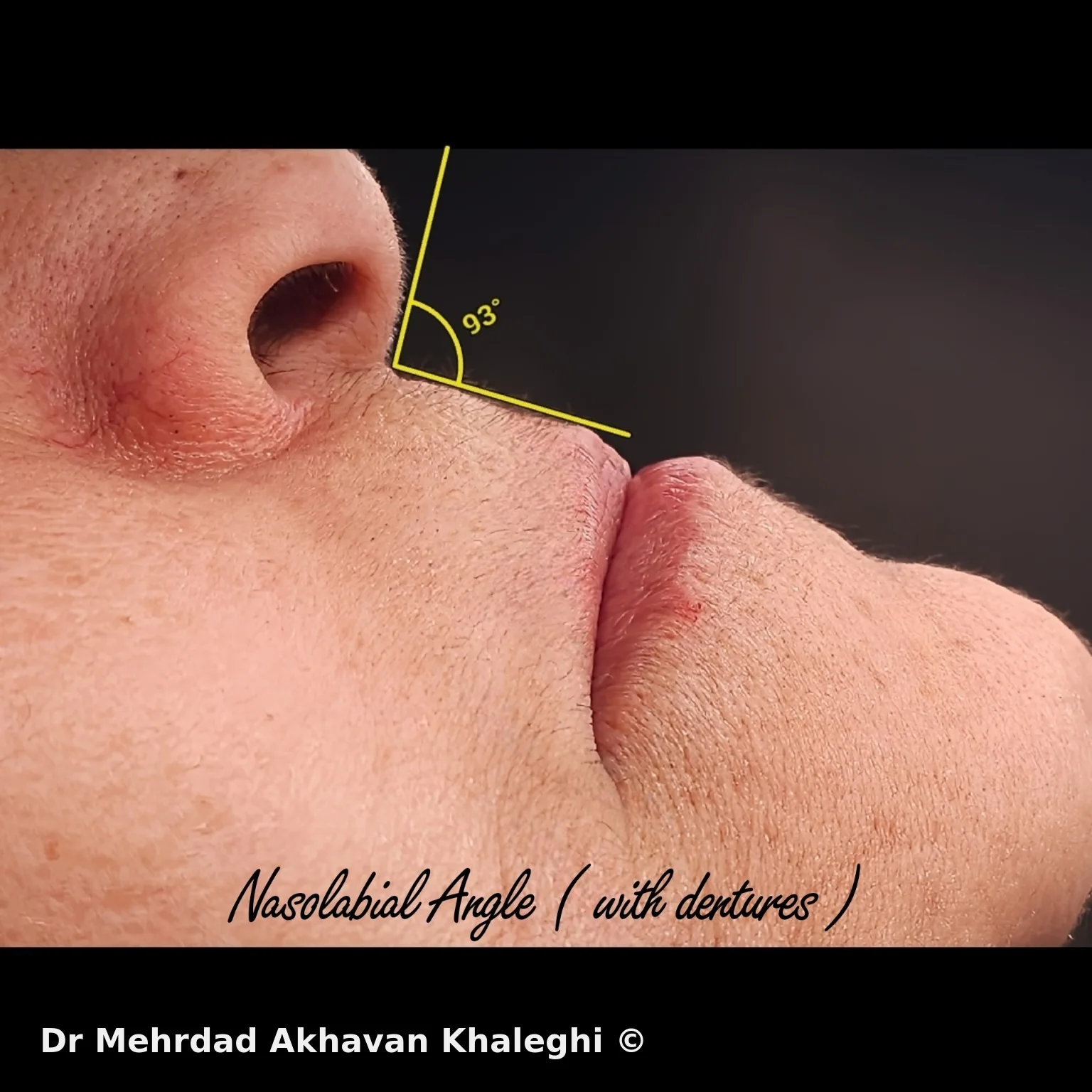
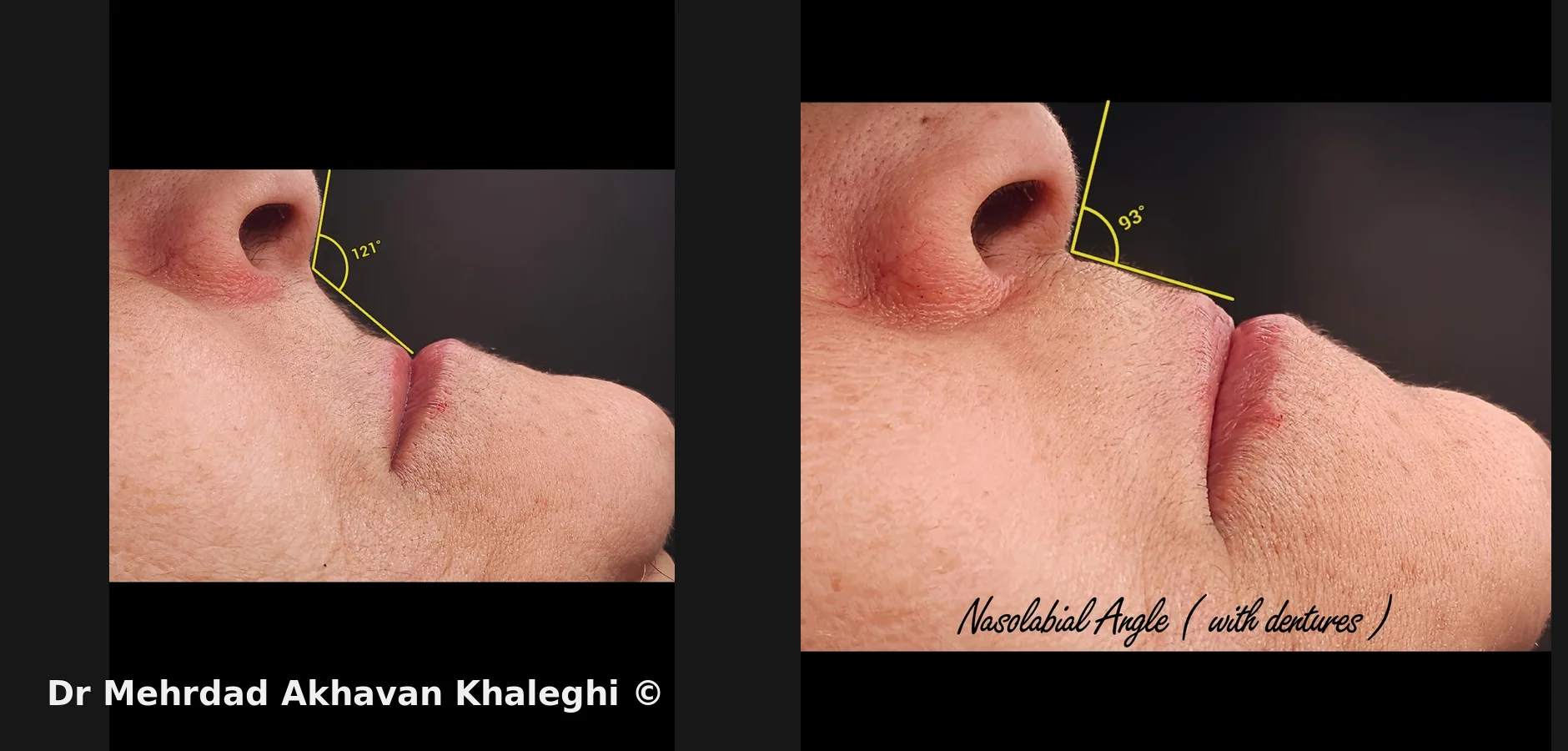
In complete edentulism, a narrow focus on retention can obscure another important part of treatment. Tooth position, flange volume, and prosthetic contour do more than replace missing teeth; they also support the lips and influence the facial profile. In this patient, the profile photographs demonstrated that effect clearly. The nasolabial angle measured approximately 121° without the prostheses and 93° with them in place. These values are not intended as reference targets for edentulous patients in general, but in this case they documented that the effect of treatment extended beyond the oral cavity.
Treatment design
Four implants in each arch—but not necessarily the same design
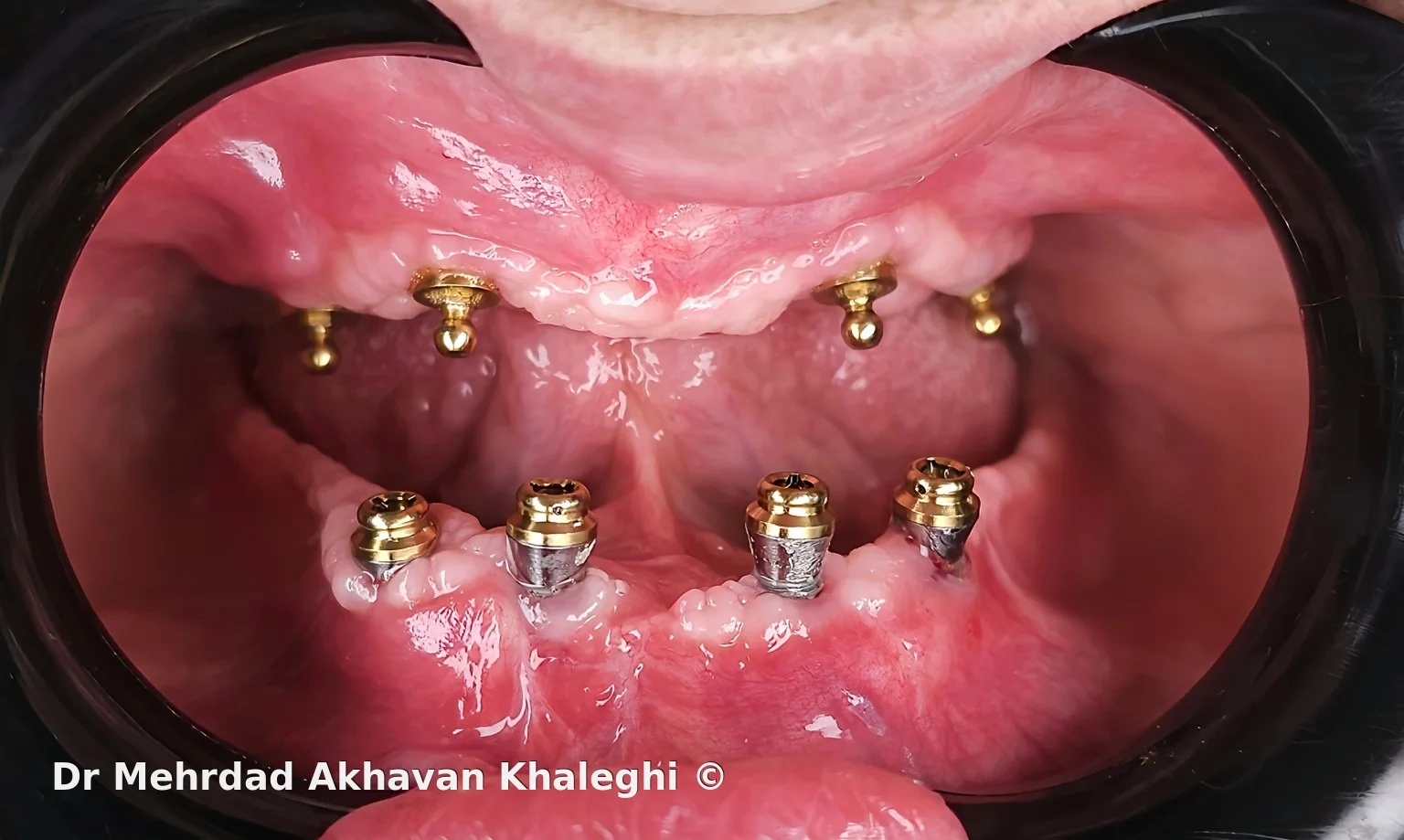
Four implants were used in each arch, and the definitive prostheses were designed as implant-retained, tissue-supported overdentures. The implants provided retention and stability, but part of the support still came from the denture-bearing tissues. Implant retention therefore does not remove the need to respect the basic principles of removable prosthodontic design.
ball attachments were used in the maxilla and Locator attachments in the mandible. The mandibular Locators were selected because prosthetic space was limited. When the two arches present different conditions, there is no reason to impose symmetry simply by using the same attachment system in both. Attachment selection should follow the available space, implant position, and prosthetic requirements of each arch rather than a desire to make the designs look identical.
Both prostheses incorporated metal frameworks, and the occlusion was arranged as bilateral balanced occlusion. Greater retention from implants does not eliminate the need for adequate rigidity, appropriate tissue support, or control of occlusal forces; the final result depends on all of these elements working together.
Patient-specific decision
When a patient preference meets a biomechanical principle
One of the patient’s major concerns was palatal coverage of the maxillary prosthesis. In a maxillary overdenture that remains partly tissue-supported, palatal coverage can contribute to support, stability, and force distribution. Removing it is therefore not a routine decision that should be made solely because the patient dislikes the sensation of palatal coverage.
One of the patient’s explicit preferences from the outset was to avoid palatal coverage in the maxillary prosthesis. The maxillary overdenture was therefore designed as palateless from the beginning. That preference alone was not enough to determine treatment: reducing palatal coverage in a tissue-supported overdenture can influence support and stability, so ridge conditions, implant number and position, and the overall prosthetic design had to be considered together. After those factors were evaluated, a palateless design was selected as a deliberate, case-specific compromise. This case is not presented to suggest that a palateless maxillary overdenture is inherently superior; it illustrates that patient preference can become part of treatment planning when it remains biomechanically defensible.
This is where shared decision-making becomes clinically meaningful. The clinician’s role is not simply to carry out a patient request, just as applying a general rule without regard for individual circumstances is not always the best treatment. The question is whether a patient preference can be accommodated within a design that remains scientifically and prosthetically defensible.
Prosthetic outcome
Facial support is part of the prosthetic outcome
In the definitive design, tooth position and prosthetic contours were not determined only by occlusion and dental esthetics. Restoring the lost lip support was also part of the treatment objective.
The change in profile should therefore not be viewed merely as an incidental esthetic effect. One advantage of removable prostheses in selected edentulous patients is the ability to replace lost soft-tissue volume through appropriate base and flange contours—something a fixed restoration cannot always reproduce in the same way.
This is a reminder that the assessment of a complete denture or overdenture should not stop at the teeth, the attachments, or the amount of retention. The prosthetic result becomes part of the patient’s face and should be evaluated on that scale as well.
Follow-up
Five-year follow-up: maintenance is part of the design
The documented follow-up period is approximately five years. During that time, the retentive caps of the maxillary ball attachments were replaced once.
Replacement of retentive components in an overdenture does not necessarily indicate treatment failure. These components are subject to wear and may lose retention over time. Their accessibility and the ability to adjust or replace them predictably are part of the maintainability of the prosthesis and should be anticipated as part of its service life rather than treated as an unexpected event.
What makes this case clinically important is not the number of implants or the attachment type alone. In a completely edentulous patient, treatment has to address several needs at the same time: retention and stability, prosthetic space, tissue support, occlusal control, maintainability, and, in some patients, restoration of facial support.
A successful prosthesis is not simply one that stays in place more firmly. Sometimes the more important question is how well the prosthesis integrates with the tissues, function, and face of the individual patient. Better treatment is not necessarily the more fixed treatment; it is the treatment that best fits the patient’s needs, anatomy, prosthetic space, and preferences.
Clinical case and photography © Dr Mehrdad Akhavan Khaleghi. Unauthorized use or reproduction prohibited.