Clinical Case 2
Ceramic veneers: when the most important decision is knowing where to stop
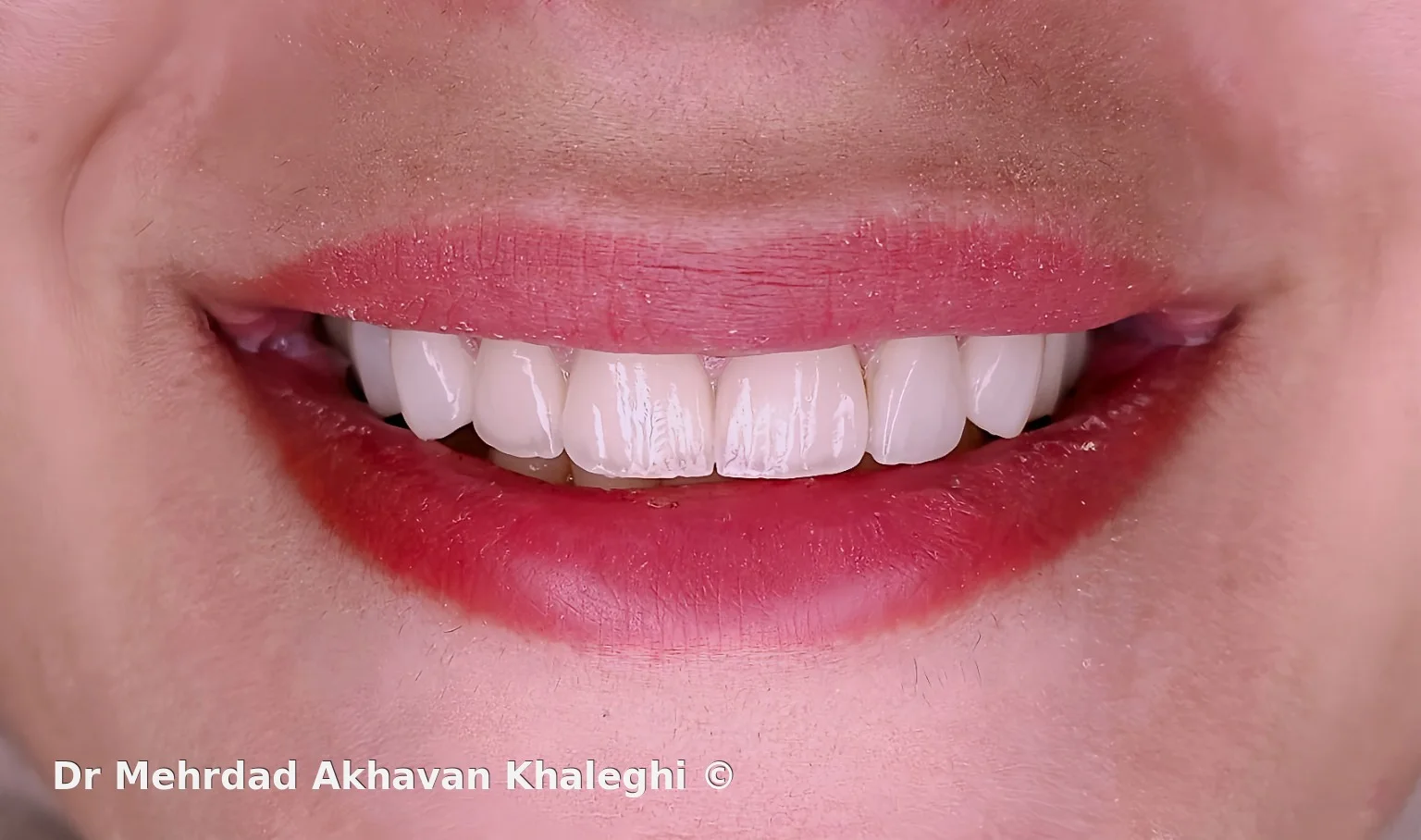
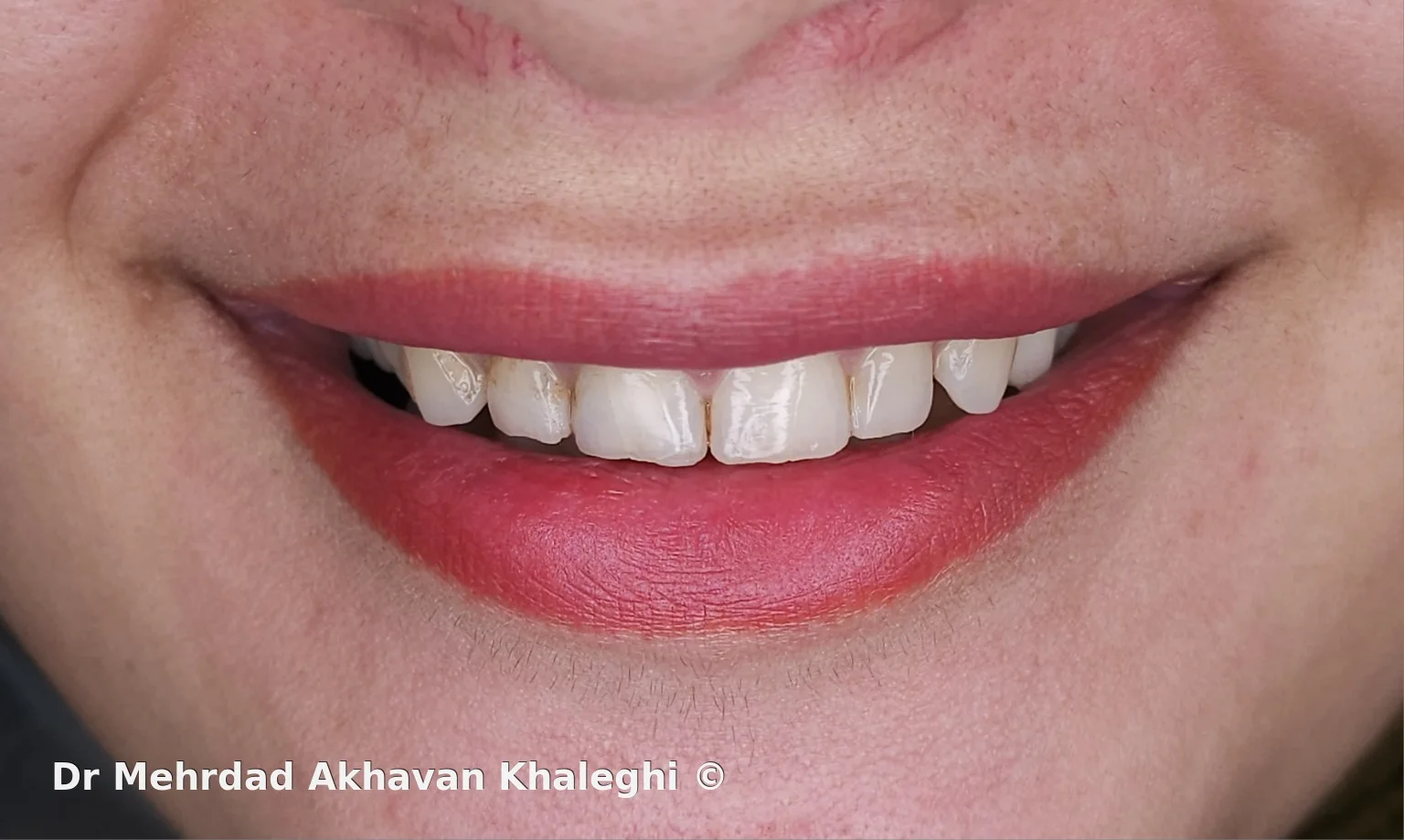
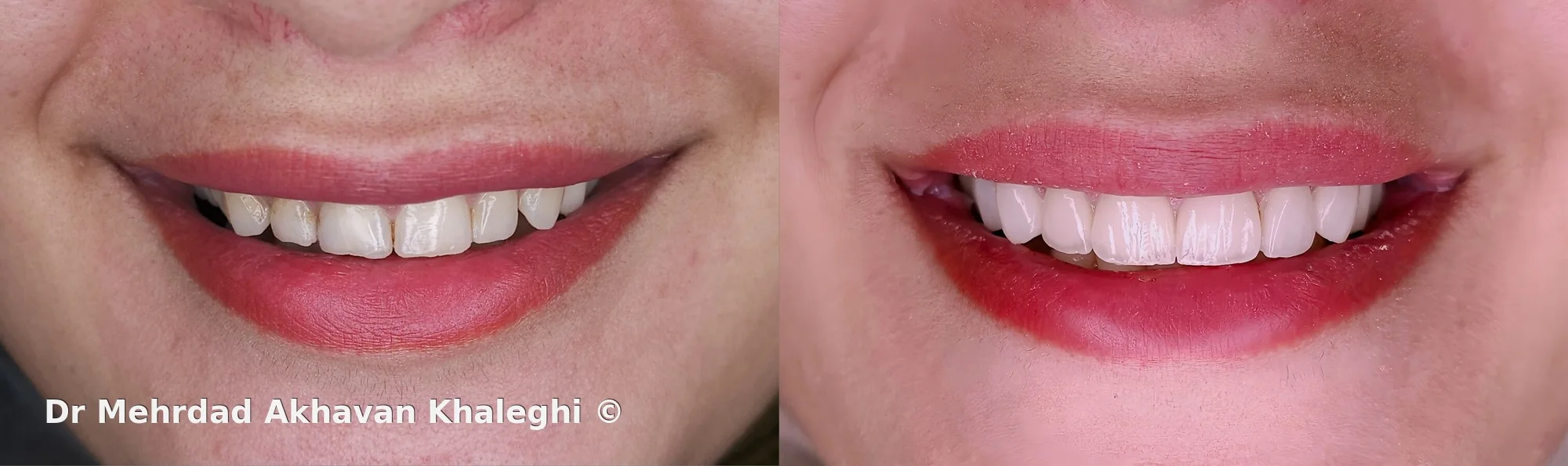
In this case, the patient presented with concerns about the color and form of the anterior teeth. The existing composite restorations had discolored over time, some contours were no longer harmonious, and their relatively opaque appearance was visible in the smile. The question, however, was not simply whether to replace the composites with ceramic restorations. More important was deciding how much of the existing dentition and function actually needed to change to achieve the desired result.
Treatment boundary
Limit treatment to what actually needs correction
Esthetic treatment can easily extend beyond a patient’s actual needs. When several adjacent teeth are being restored, the temptation to pursue complete symmetry or expand the treatment field is understandable, but that alone is not an indication for intervention. In this patient, the existing crown on tooth 24 was clinically acceptable. There was no reason to replace it simply to make the treatment field more uniform, so it was retained and treatment was limited to the teeth that genuinely required correction.
Treatment planning
Before preparation, first define what does not need to change
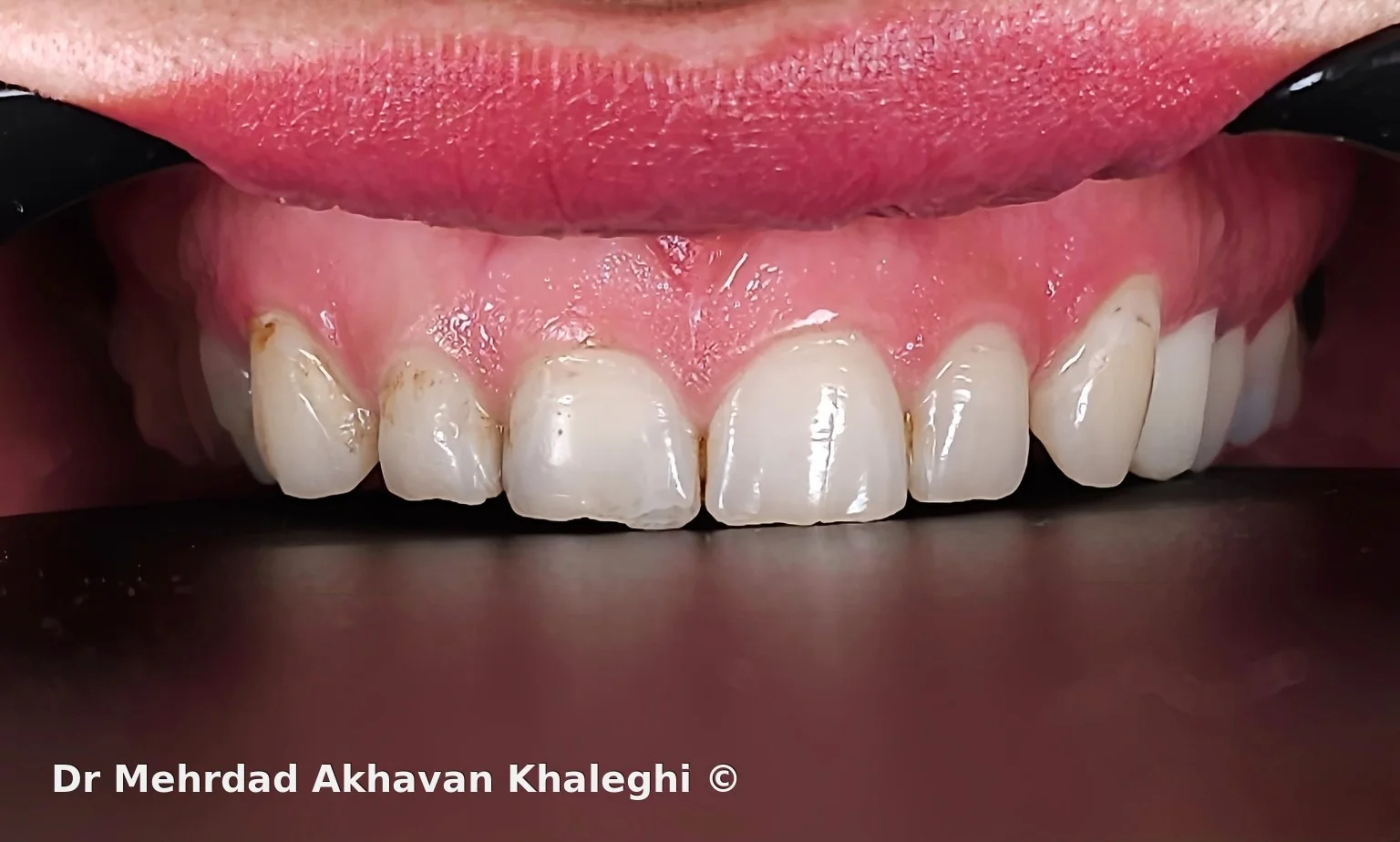
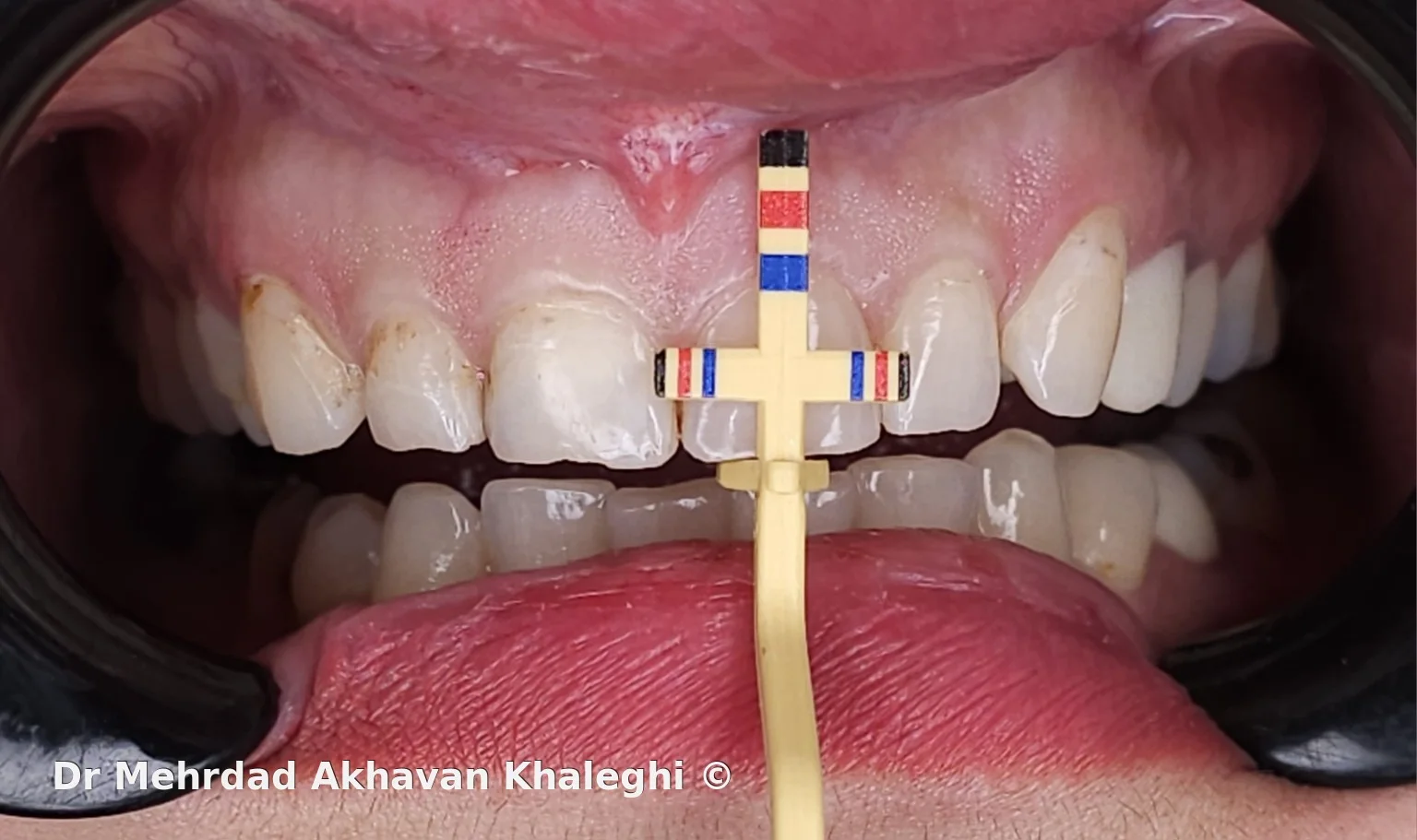
Dental and gingival proportions were assessed with a Chu Gauge, and a manual mock-up was used to evaluate the proposed tooth form. This stage was more than a preview of the esthetic result. It helped determine, before any irreversible intervention, whether changes in tooth length, volume, or position were actually necessary.
No increase in incisal length was required. That seemingly simple decision mattered: if the desired result could be achieved without lengthening the teeth, there was no reason to introduce additional esthetic or functional change. Preserving the existing length also allowed the patient’s anterior guidance to remain undisturbed.
A mock-up is not only a way to visualize what can be added. Sometimes its greater value is in showing what does not need to change at all.
Gingival tissues
Gingival correction—only as much as necessary
A limited gingivectomy was performed to improve gingival contour. Tissue removal extended to the CEJ, with no attempt to enlarge the intervention beyond what was required.
After gingivectomy, six weeks were allowed for initial tissue healing. This interval was selected in keeping with periodontal-healing principles: initial epithelial and connective-tissue healing commonly occurs over roughly four to six weeks, although full tissue maturation may continue for months. Establishing definitive margins and restoration contours before this initial stabilization could have altered the planned result, so definitive treatment was deferred until the tissues were ready.
Conservative design
Esthetic treatment does not have to mean more preparation
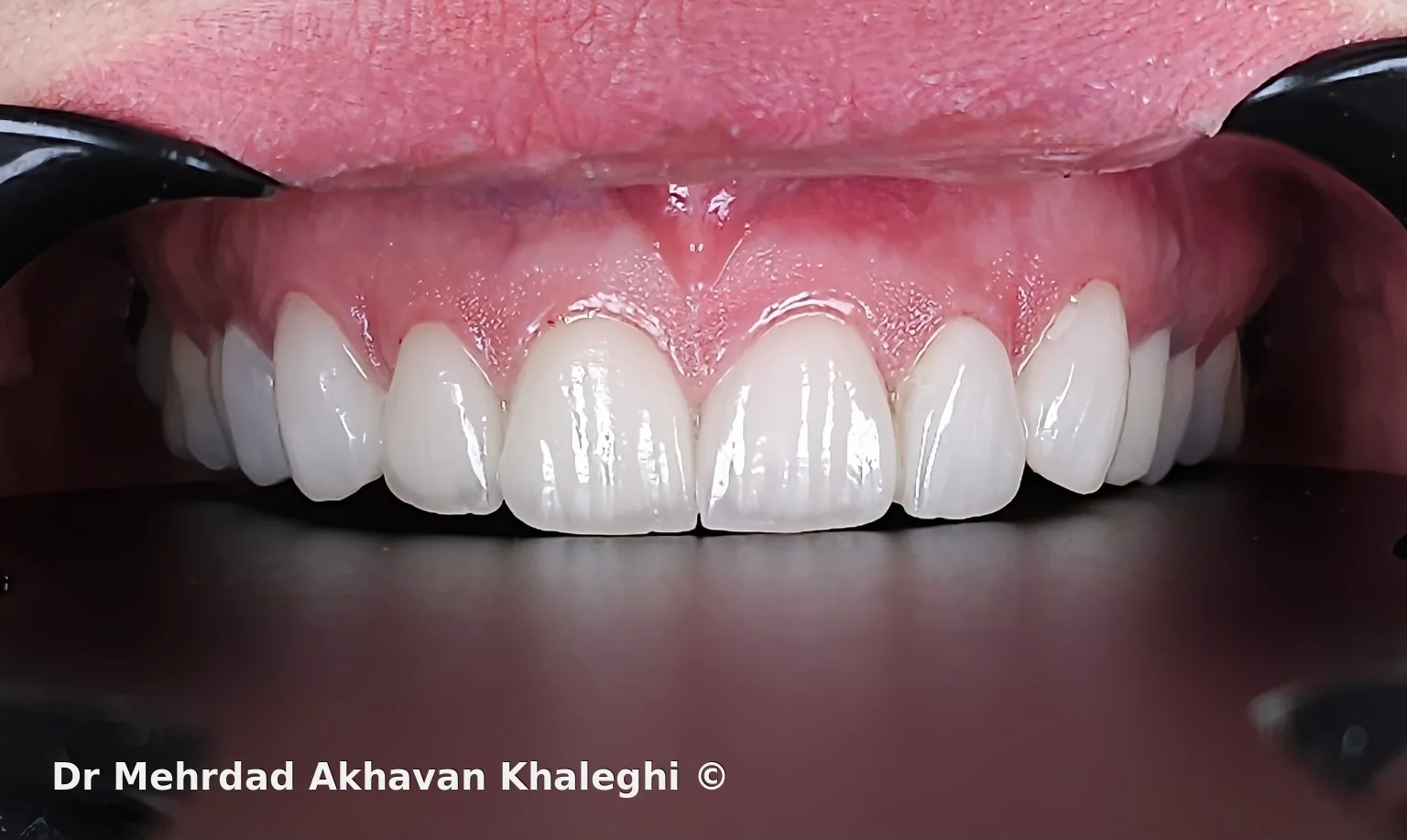
After removal of the existing composites and stabilization of the gingival tissues, preparation was guided by the form approved in the mock-up. All preparations remained within enamel, and lithium-disilicate veneers (e.max) were fabricated from tooth 23 to tooth 14.
Remaining within enamel preserved sound tooth structure and provided a more favorable substrate for adhesive bonding. More importantly, the definitive form had been planned from the outset so that achieving it did not require sacrificing additional healthy structure.
The same logic applied to the crown on tooth 24. It might not have matched the new restorations exactly in shade or material, but it remained clinically acceptable, and replacing it merely to create a more uniform treatment zone was not justified. The final result had to be integrated with what could be preserved rather than treating every difference as a reason for removal and replacement.
Follow-up
Four years later—the outcome is more than veneers that are still in place
At four years, no gingival inflammation, marginal discoloration, debonding, chipping, or restoration fracture was observed or reported.
A night guard was also provided after treatment, but consistent use was not documented. The four-year outcome therefore cannot be attributed to compliance with the appliance. This distinction matters in long-term assessment: documented findings should be separated from explanations that are only plausible.
At the same time, success cannot be defined simply by the veneers remaining bonded. Gingival health, absence of marginal discoloration, absence of fracture or chipping, and overall stability together provide a more meaningful picture of how the treatment has performed over these four years.
Conclusion
Defining the boundary of intervention
What makes this case valuable is not the number of veneers or the visible change in the smile. More important was defining the boundary of intervention: no increase in incisal-edge length was necessary, anterior guidance was not altered without indication, gingival correction remained limited, the preparations stayed within enamel, and the clinically acceptable crown on tooth 24 was not replaced simply because it sat beside new restorations.
In esthetic dentistry, the fact that a structure can be changed is not, by itself, a sufficient reason to change it. Sometimes the most important treatment decision is knowing where to stop.
Clinical case and photography © Dr Mehrdad Akhavan Khaleghi. Unauthorized use or reproduction prohibited.